Quick answer
Scrape, scrub with hot soapy water, rinse, sanitize, then air-dry. For the sanitizing step, the USDA suggests about 1 tablespoon of unscented liquid chlorine bleach per gallon of water, left on the surface for a few minutes and then rinsed off. The smoother and less porous your board is, the easier every one of these steps becomes.
Most kitchen cross-contamination doesn't come from the stove. It comes from a board that held raw chicken and then, a few minutes later, held the salad. Cooking makes meat safe to eat, but a board doesn't go in the oven. What's left on its surface goes wherever you put it next. Here's the routine food-safety educators recommend, what changes depending on your board's material, and the small habits that make it almost automatic.
The 5-step routine after raw chicken, meat or fish
1. Scrape it off right away
Don't let the board sit by the sink while dinner cooks. Scrape fat, skin and scraps into the trash as soon as you're done cutting. Dried-on juice is harder to remove and gives bacteria more time on the surface.
2. Scrub with hot, soapy water
This is the step that does most of the work. Use hot water, dish soap and a stiff brush or the rough side of a sponge, and scrub the whole board, including the edges and the back, since juices run. Pay extra attention to knife marks: grooves are exactly where residue hides. A brush reaches into them far better than a soft cloth.
3. Rinse thoroughly
Rinse under clean running water until no soap or film remains. If you still see a greasy sheen, wash again; sanitizers work best on a surface that's already clean.
4. Sanitize (recommended after raw poultry)
Washing removes most of the mess; sanitizing is the extra margin. The USDA's home food-safety guidance suggests a solution of about 1 tablespoon of unscented liquid chlorine bleach per 1 gallon of water. Wet the entire surface, let it stand for a few minutes, then rinse with clean water. Mix a fresh batch each time, never combine bleach with vinegar or ammonia, and keep the area ventilated.
Prefer not to use bleach? Many households use a food-contact-safe kitchen sanitizer instead. Just follow the contact time printed on the label, since that's what makes it work.
5. Dry it standing up
Moisture is what bacteria like most. Pat the board with a clean paper towel or stand it upright in a rack so air reaches both sides. Don't stack it flat in a cabinet while it's still damp.

What changes by board material
The routine is the same, but each material reacts differently to water, heat and chemicals:
| Board | Dishwasher? | Bleach solution? | Watch out for |
|---|---|---|---|
| Plastic | Usually yes (thin boards may warp) | Yes | Deep grooves that trap residue; scarred boards are hard to get fully clean |
| Wood | No | Yes, briefly, then rinse and dry well | Never soak it; re-oil after sanitizing so it doesn't crack |
| Bamboo | No | Yes, briefly | Glue lines can split if left wet |
| Glass / stone | Usually yes | Yes | Easy to clean, but hard on knife edges |
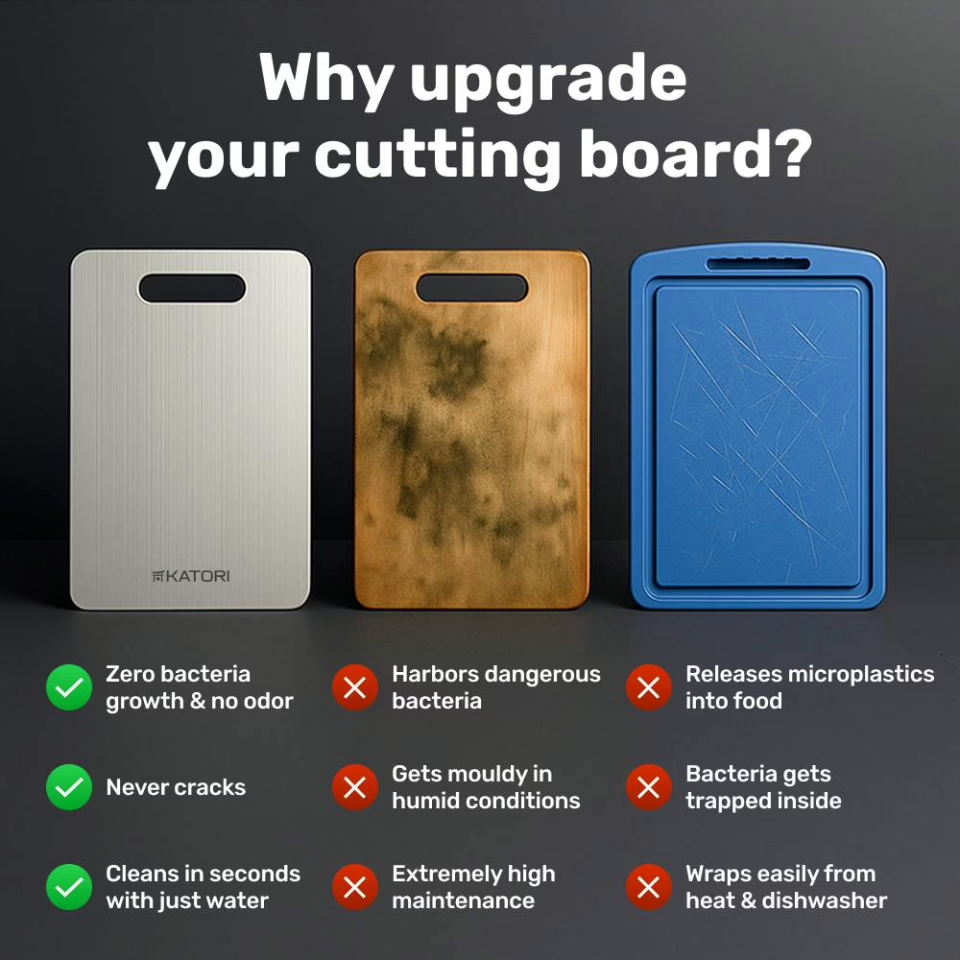
| Titanium (Katori) | Yes | Optional; a hot, soapy wash rinses it clean | Nothing routine: no pores, no warping, no oiling |
Wooden boards deserve a special note. Wood has natural pores and, as it ages, cracks. Cleaning it well is absolutely possible, but it takes more care: quick wash, no soaking, thorough drying and regular oiling. Plastic, on the other hand, starts out smooth and becomes the hard case once knife scars build up. That's one of the clearest signs a cutting board needs replacing. Prepping meat and vegetables in one session? Our weekly vegetable meal prep routine shows the cutting order that keeps raw meat away from everything else.
6 common cleaning mistakes
- A quick rinse under the tap. Water alone moves juices around; it doesn't lift fat. Soap and scrubbing do.
- Using the same sponge for everything. A sponge that just wiped a chicken board shouldn't wipe the counter. Wash or replace sponges often, or use a brush that dries quickly.
- Cutting veggies on the "rinsed" board. Wash and dry it first, or use a separate board or side for produce.
- Soaking wooden boards. It feels thorough, but it swells the wood and leads to cracks that are harder to clean later.
- Relying on vinegar or lemon alone. Great for smells (see our guide to getting rid of smells and stains on a cutting board), not a replacement for a proper sanitizer after raw meat.
- Keeping a badly scarred board. If you can feel deep valleys with your fingertips, no scrub gets it perfectly clean.
The habit that matters most: separate boards (or sides)
Cleaning well is important, but not mixing foods in the first place is even easier. Food-safety educators consistently recommend one board for raw meat, poultry and seafood, and another for produce, bread and anything eaten raw. Some people color-code their boards. Others use a double-sided board with one side reserved for raw meat. (Hosting a holiday meal? Our Thanksgiving cutting board checklist applies the same rules to a whole turkey and a dozen sides.)
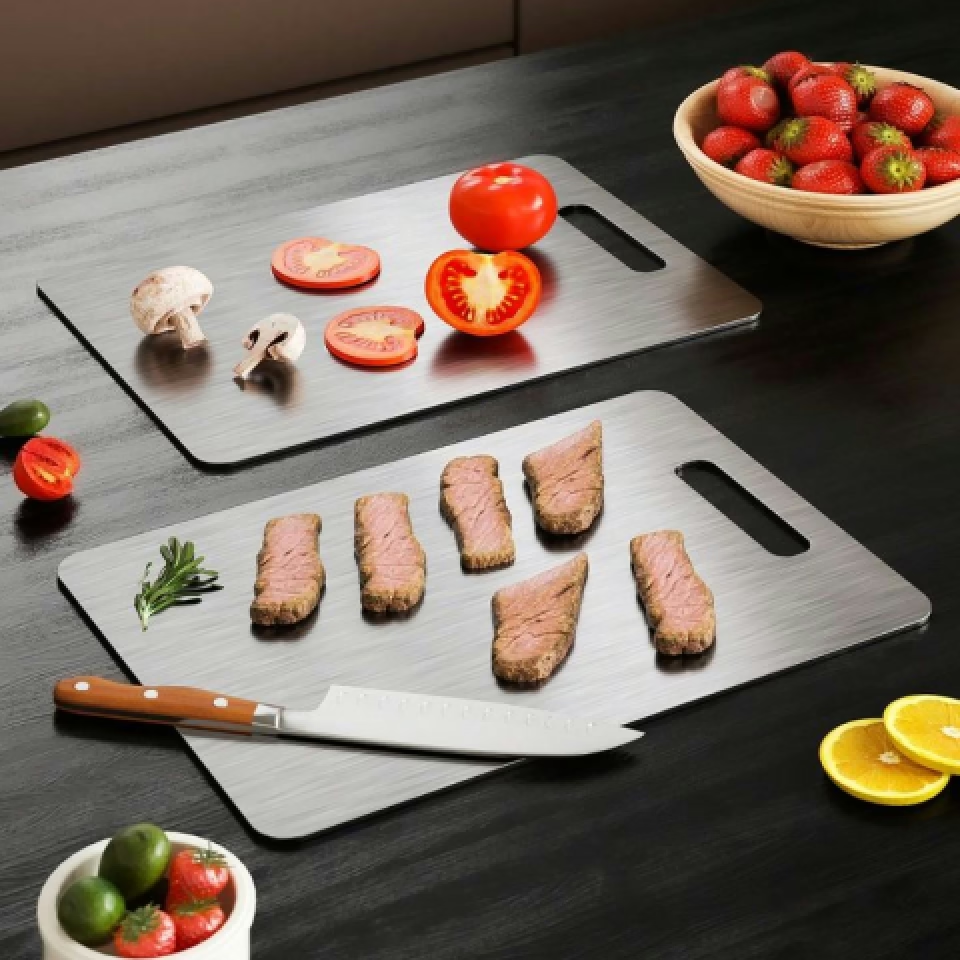
That's one reason we like the double-sided design of the Katori titanium cutting board: one face for raw protein, the other for ready-to-eat food, on a single board that takes up one slot in the drying rack.
Why a non-porous board makes cleaning easier
Every step above is fighting the same two problems: pores that absorb and grooves that hide. Take those away and cleaning gets faster and more dependable. Solid titanium doesn't have pores, resists the deep knife scarring that plastic develops, and doesn't hold onto garlic or fish odors. It's heat-proof and dishwasher-safe, so after a raw-chicken night you can simply load it in with the dishes. It also sheds zero microplastics, which we explain in our guide to microplastics from plastic cutting boards.
A small adjustment: the firmer surface feels different from soft wood for the first day or two. Most home cooks get used to it quickly, and the knife-friendly titanium finish means your blades stay sharp. If you're comparing options, our wood vs plastic vs titanium guide lays out every material side by side.
Already slipped and chopped the salad on the chicken board? Our emergency guide covers what to do right now if you used the same cutting board for raw chicken and vegetables.
Our recommendation: the Katori titanium cutting board
If raw chicken, beef or fish is a regular part of your week, the Katori 100% titanium cutting board is the board we recommend, because it makes the 5-step routine above quicker and more dependable every single time you cook.
- Double-sided by design: raw protein stays on one face and produce on the other, so the "separate boards" rule is built in.
- Nowhere for juices to hide: solid, non-porous titanium with no deep knife grooves, so a scrub with hot, soapy water reaches the whole surface.
- Dishwasher-safe: no glue, no coating and nothing to warp, so after a raw-meat night it can go straight in with the dishes.
- Odor-resistant: fish and garlic smells rinse off instead of lingering into tomorrow's breakfast.
- Gentle on knives: you get a hygienic surface without the dull edges that glass and stone boards cause.
On the official store a single board is currently $59.00 and the best-selling 2-board set is $99.98 (one just for raw meat is a popular setup), with shipping calculated at checkout. Every order is backed by a 30-day money-back guarantee, so you can try it through a few raw-meat dinners risk-free.
Cleaning a cutting board after raw meat: FAQ
Is soap and hot water enough after cutting raw chicken?
Hot, soapy water and a good scrub remove most residue and are the most important step. Food-safety agencies also suggest an optional sanitizing step for boards used with raw poultry or meat, such as a diluted bleach solution, followed by a rinse and air-drying.
What is the bleach ratio for sanitizing a cutting board?
The USDA suggests about 1 tablespoon of unscented liquid chlorine bleach per gallon of water. Wet the whole surface, let it sit for a few minutes, rinse with clean water and let the board air-dry or pat it dry with a clean paper towel.
Does vinegar disinfect a cutting board?
Vinegar is handy for deodorizing and light cleaning, but it is not considered as reliable as a proper sanitizer against the bacteria associated with raw meat. Use it for smells, not as your only step after raw chicken.
Can I put my cutting board in the dishwasher?
Many plastic and all-metal boards can go in the dishwasher, though thin plastic can warp from the heat. Wooden and bamboo boards should stay out, because soaking and high heat cause cracks and warping. We break it down material by material in can you put a cutting board in the dishwasher?
Should I use a separate cutting board for raw meat?
Yes. Keeping one board, or one dedicated side of a board, for raw meat, poultry and seafood and another for produce and ready-to-eat food is one of the simplest ways to lower the risk of cross-contamination.
Which cutting board is easiest to clean after raw meat?
A smooth, non-porous board is easiest, because there are no pores or deep knife grooves for juices to settle into. A solid titanium board like Katori rinses clean, resists odors and stains, and is dishwasher-safe.
Ready to make kitchen cleanup simpler? Head back to the Katori overview or read our hands-on Katori review.