Quick answer
Plan 3–4 meals, wash and dry everything first, then chop from mildest to strongest (crunchy raw veggies, then peppers and carrots, then onions and garlic last), and store each vegetable dry in an airtight container. Prep only the produce that keeps; cut tomatoes, avocado and cucumbers fresh. The whole routine takes about an hour once you have the rhythm, and a stable, non-porous board that goes in the dishwasher, like the Katori titanium cutting board, makes the cleanup part almost disappear.
Most people don't skip vegetables because they don't like them. They skip them because at 7 p.m. on a Tuesday, peeling, washing and dicing feels like one job too many. Batch-prepping vegetables once a week moves that work to a calmer moment, and it's one of the simplest habits for eating better and wasting less produce. The trick is doing it in the right order, so you're not washing the board five times or ending up with soggy containers by Wednesday.
Why vegetable meal prep often fails
- No plan. Chopping "everything in the fridge" means half of it goes unused and spoils in a container.
- Wet vegetables in sealed boxes. Moisture is what turns prepped vegetables slimy in two days.
- The wrong vegetables. Tomatoes, cucumbers and avocado don't survive a week cut.
- A board that fights you. A board that slides, holds onion smell or stains orange from carrots and turmeric makes the whole session feel like a chore, and a dull knife makes it slower and less safe.
Before you start: plan and set up (10 minutes)
- Pick 3–4 mealsA stir-fry, a sheet-pan dinner, a soup or chili, and lunches with a big salad cover most weeks. Write down the vegetables each one needs.
- Choose 5–7 vegetables that keepOnions, carrots, celery, bell peppers, broccoli, cauliflower and cabbage are the reliable meal-prep workhorses.
- Set up a stationBoard on a damp towel so it can't slide, a sharp chef's knife, a large bowl for scraps, and clean containers lined up within reach.
- Wash and dry everything firstRinse whole produce, then dry it well with a towel or salad spinner. Clean, dry vegetables go on the board; dirt and water don't.
The chopping order that saves time (35–40 minutes)
The order matters because it means you never have to stop and wash the board in the middle of the session. Go from mildest and cleanest to strongest:
- Raw-snack vegetables firstCarrot and celery sticks, snap peas, radishes: the things you'll eat raw. They go first while the board is perfectly clean.
- Peppers and broccoliSlice peppers into strips for stir-fries and fajitas; cut broccoli and cauliflower into florets and keep the stems for soup.
- Hard roots and cabbageDice carrots for soups and roasting; shred cabbage for slaws and stir-fries. A steady board and a sharp knife matter most here.
- Onions, shallots and leeksDiced onion is the single most useful thing you can prep. Do it near the end, so the smell doesn't travel onto everything else.
- Garlic and chiles lastThe strongest flavors finish the session. Then the board goes straight to the sink or dishwasher.
- Raw meat? Different board or side, and only after the produceIf you're also portioning chicken or marinating meat, use a separate board or the dedicated side of a double-sided board. Our guide on cleaning a cutting board after raw meat covers the full routine.
What keeps and what to cut fresh
| Vegetable | Prep ahead? | How to store |
|---|---|---|
| Carrots, celery | Yes | Sticks or dice in an airtight container; sticks stay crisp in a little water |
| Bell peppers | Yes | Strips or dice, dry, airtight container |
| Onions, shallots | Yes | Diced, in a tightly sealed jar so the smell stays put |
| Broccoli, cauliflower | Yes | Florets, dry, container lined with a paper towel |
| Cabbage | Yes | Shredded, airtight container |
| Leafy greens (kale, romaine) | Partly | Washed and fully dried, wrapped in a towel; chop or tear close to serving |
| Tomatoes, cucumbers | No | Cut on the day; they turn watery |
| Avocado, mushrooms, potatoes | No | Cut on the day; they brown or go soft |
Storage times vary with freshness and your fridge, so trust your senses: anything slimy, sour-smelling or discolored goes in the compost.
Pack and clean up (10 minutes)
- Label by meal, not by vegetable. A "stir-fry Tuesday" container with peppers, broccoli and onion is faster to use than six separate boxes.
- Paper towel in the bottom of containers for florets and greens to absorb extra moisture.
- Front of the fridge. If you can see it, you'll use it.
- Clean the board and knife right away. Onion and garlic juice is easiest to remove before it dries. If your board still smells like garlic the next day, here's how to get smells and stains out of a cutting board.
Why your board matters more than you think
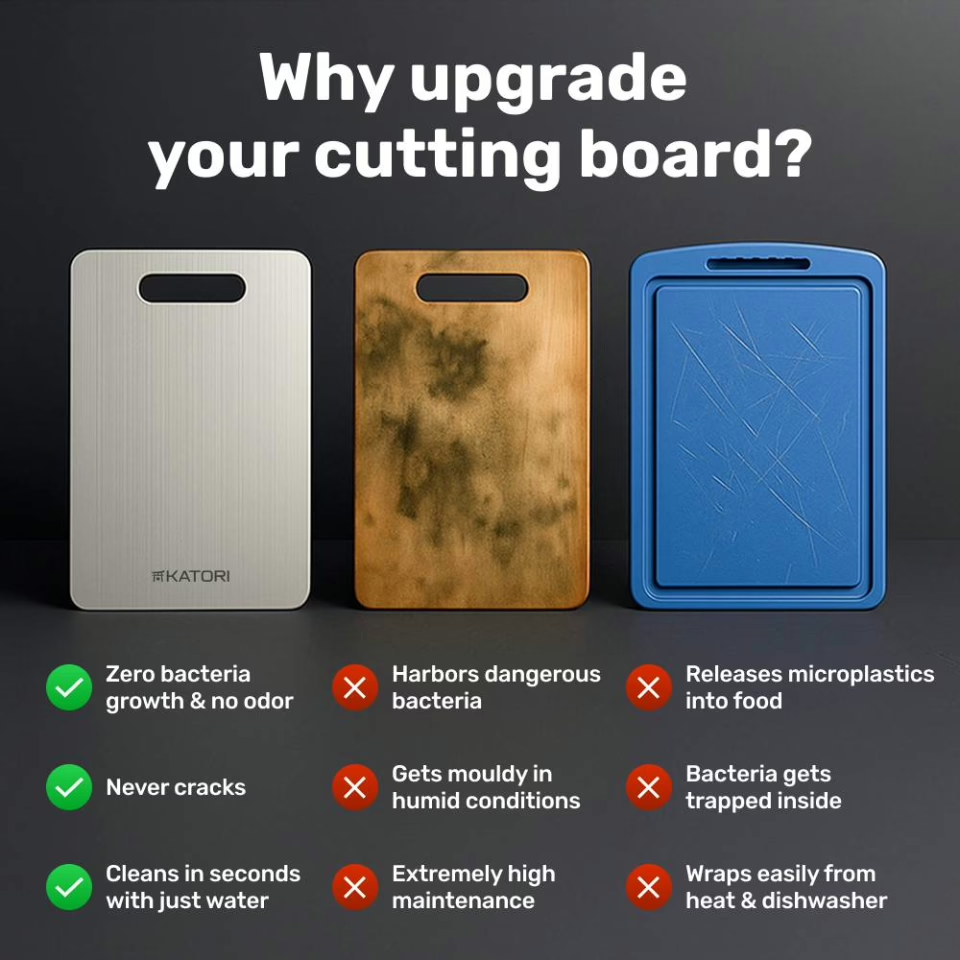
An hour of continuous chopping puts your cutting board through more in one session than most boards see in a week of normal cooking. Plastic boards slide and pick up deep knife grooves, which hold onto color and smell. Wood boards are pleasant to cut on but need hand-washing, drying and oiling, which is the last thing you want after a prep session. Glass and stone boards dull your knife fast. That's why more and more meal-preppers are switching to a solid titanium board like Katori: one surface that handles the whole session and goes straight in the dishwasher afterwards. Not sure what fits your kitchen? We compare wood, plastic and titanium boards side by side.

Our recommendation: the Katori titanium cutting board
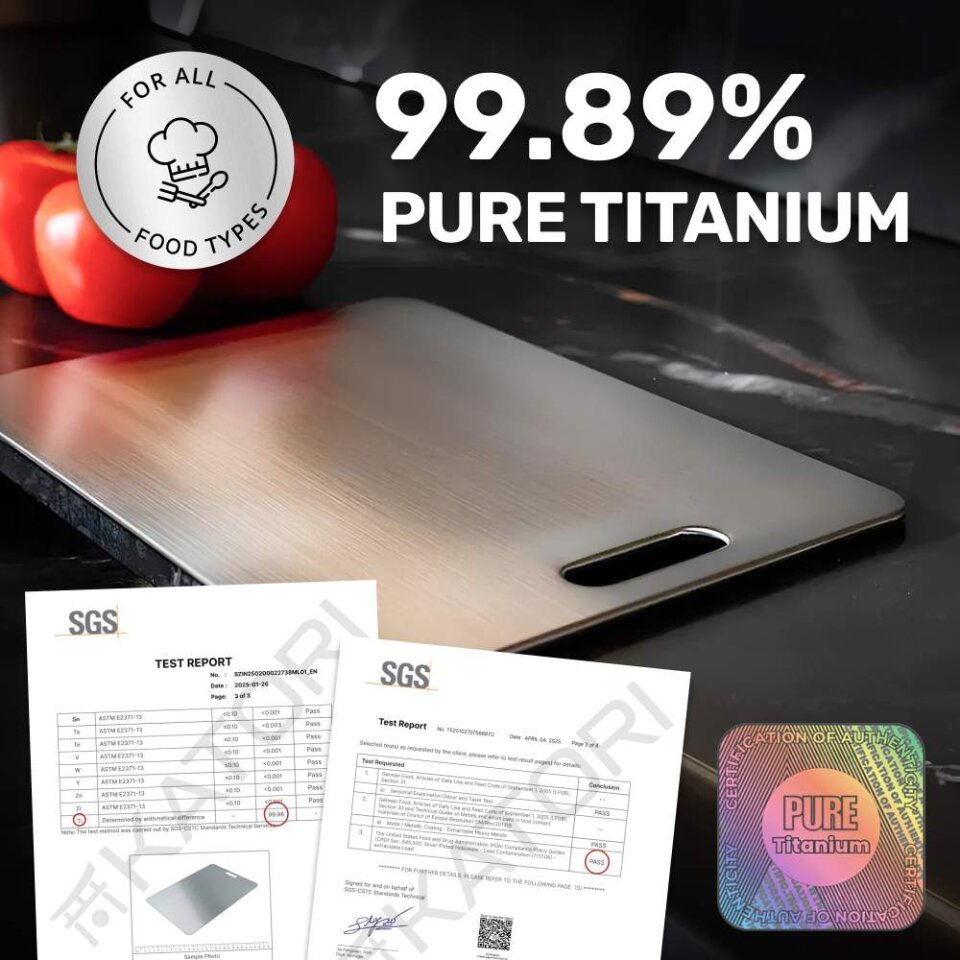
If you want your weekly prep session to be faster, cleaner and easier to tidy up, the Katori 100% titanium cutting board is the board we recommend. It solves the exact problems that make batch chopping a chore.
- Double-sided: one face for produce, the other for raw meat and strong foods, so the cutting order above is easy to stick to.
- Non-porous and antibacterial: onion, garlic and carrot juice have nowhere to soak in, so the board doesn't keep smells or stain.
- Kind to your knives: the laser-cut titanium surface helps your knife keep its edge through an hour of chopping, unlike glass or stone.
- Dishwasher-proof: no glue, no coating, nothing to warp. Load it when you're done and the cleanup is over.
- Zero microplastics, zero maintenance: no grooved plastic shedding into your food and no oiling routine.
At 11.4" x 7.9", it's a compact everyday size: prep one vegetable at a time and slide each batch into a bowl or container as you go, which keeps your workspace tidy anyway. On the official store a single board is currently $59.00, the best-selling 2-board set is $99.98 (handy if you want one board just for raw meat) and the 3-board set is $137.85, with shipping calculated at checkout. Every order is backed by a 30-day money-back guarantee, so you can run a few Sunday prep sessions on it before you decide.
Vegetable meal prep: FAQ
How long do chopped vegetables last in the fridge?
Sturdy vegetables like carrots, celery, bell peppers, onions, cabbage, broccoli and cauliflower generally keep for several days to about a week when washed, dried well and stored in airtight containers. Softer or watery produce such as cucumbers, tomatoes, mushrooms and avocado is best cut on the day you eat it. Always check for smell, slime or discoloration before using.
Which vegetables should you not chop ahead of time?
Anything that browns, goes soggy or loses texture quickly: avocado, tomatoes, cucumbers, mushrooms, apples, potatoes and sweet potatoes (unless kept under water), and delicate herbs. Prep these the day you use them.
Should you wash vegetables before or after chopping them for meal prep?
Wash before chopping, then dry thoroughly. Washing whole produce keeps dirt off your board and knife, and drying matters because leftover moisture is what makes prepped vegetables go slimy in the container.
Can I use the same cutting board for vegetables and raw meat during meal prep?
Use a separate board or a separate side for raw meat, and always cut produce first. If you only have one surface, wash it thoroughly with hot soapy water between raw meat and anything eaten raw. A double-sided, non-porous board makes this much easier to keep straight.
How long does it take to meal prep vegetables for a week?
For one or two people and five to seven vegetables, about an hour is realistic once you have a routine: roughly 10 minutes to wash and dry, 35 to 40 minutes to chop in the right order, and 10 minutes to pack and clean up. The first time usually takes longer.
What is the best cutting board for meal prep?
A stable, non-porous board that doesn't hold odors or stains, doesn't dull your knife and goes straight in the dishwasher afterwards. That's why we recommend a solid titanium board like Katori: double-sided, easy to clean and ready for the next session.
Want to keep learning? See how to keep your kitchen knives sharp, find out which cutting boards can go in the dishwasher, head back to the Katori overview or read our hands-on Katori review.