Quick answer
Wood and bamboo: no, never. Most plastic: yes, but it warps and keeps its stains. Glass and solid metal: yes. The dishwasher's hot water, long soak and heated drying are brutal on anything porous, glued or layered, which is exactly what wood and bamboo boards are. If you want a board you can load without a second thought, a solid, non-porous one like the Katori titanium cutting board is the simplest answer: no glue, no coating, nothing to warp.
"Dishwasher-safe" is one of the most searched questions about cutting boards, and for good reason. Hand-washing a board after raw chicken is a chore, and the dishwasher feels like the more hygienic option. The catch is that the dishwasher is a harsh environment: water at around 120–160 °F, strong detergent, a wash that can run over an hour and a heated-dry stage at the end. Whether a board survives that depends entirely on what it's made of.
What the dishwasher does to a cutting board
Three things happen inside a dishwasher that most boards aren't built for:
- Prolonged soaking. Any material that absorbs water swells. When it dries again it shrinks, and if it dries unevenly (which it always does in a dishwasher), it warps.
- High heat. Heat weakens glue, softens some plastics and accelerates the swelling-and-shrinking cycle in wood.
- Strong detergent. Dishwasher detergent is alkaline and abrasive to natural fibers. It strips the oil out of wood and leaves it dry, fuzzy and prone to cracking.
A board that is solid, non-porous and made from a single material shrugs all of that off. A board that is porous, glued or coated doesn't. That one distinction explains the whole table below.
Dishwasher safety by material
| Material | Dishwasher? | What goes wrong | How to wash instead |
|---|---|---|---|
| Solid wood (maple, walnut, teak) | No | Warps, cups, cracks; glue joints on edge-grain boards split open | Hot soapy water, rinse, dry upright, oil monthly |
| Bamboo | No | Delaminates at the glue lines, splits and warps even faster than wood | Same as wood; never soak |
| Plastic (HDPE / polypropylene) | Usually | Thin boards warp; heated dry softens the surface; stains stay in knife grooves | Top rack, skip heated dry |
| Wood-fiber composite (resin boards) | Check the label | Many are rated safe, but repeated cycles dull the finish and some edges swell | Hand-wash to extend life |
| Glass | Yes | Survives fine, but destroys knife edges and can chip or shatter if knocked | Any |
| Solid titanium (Katori) | Yes, every time | Nothing: no glue, coating, pores or layers to damage | Rinse or dishwasher, your choice |
Wood and bamboo: why one cycle can ruin them
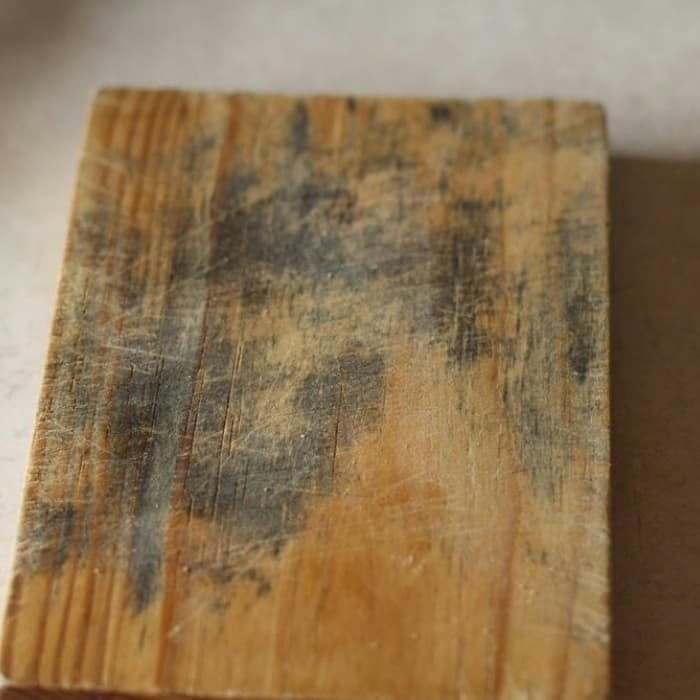
Wooden boards are the ones people most want to put in the dishwasher, and the ones that suffer most. Wood is made of fibers that drink up water. In a dishwasher they absorb far more than during a quick hand-wash, then the heated-dry stage pulls that water out fast and unevenly. The board cups, the end grain checks and small cracks appear that trap moisture and bacteria. If the board is made of glued strips (most are), the joints are the first thing to fail.
Bamboo has the same problem, with one extra weakness: it's not a plank at all but many thin strips glued together under pressure. Heat and water attack those glue lines directly, which is why bamboo boards often come out of a dishwasher looking fine and then split a few days later as they finish drying.
If you own wood or bamboo, the rule is simple: wash by hand with hot soapy water right after use, rinse, dry with a towel and stand it upright. Rub in food-grade mineral oil about once a month. It's a routine that works, but it is a routine, and it's one of the reasons many cooks eventually look for a lower-maintenance board.
Plastic: dishwasher-safe, but not quite dishwasher-proof
Plastic is the material most people associate with "dishwasher-safe", and a thick HDPE board does come through fine. The problems show up over time:
- Warping. Thin, cheap boards bend in the heat and never sit flat again, which makes them wobble and makes cutting less safe.
- Surface softening. Heated-dry cycles can leave the surface slightly softer and even more prone to knife scarring.
- Stains that won't leave. Tomato, turmeric and beet pigments settle into knife grooves. The dishwasher cleans the surface but can't pull color out of the valleys, which is why old plastic boards come out clean-smelling and still orange.
- Those grooves again. The deeper the scarring, the more residue hides below the reach of water and detergent, and the more tiny plastic particles break off every time you cut.
So yes, you can put a plastic board in the dishwasher. Just know that each cycle is slowly wearing it out, and once it's heavily grooved, no amount of hot water makes it fully clean again. Our guide on when to replace a cutting board covers the warning signs.
Glass, stone and steel: safe for the dishwasher, hard on your knives
Glass and stone boards are completely dishwasher-safe and non-porous, which is why they look like the perfect answer. Unfortunately they're also the fastest way to destroy a good knife. The surface is harder than the steel of the blade, so every stroke rolls or chips the edge. Stainless steel boards have the same issue to a lesser degree. If you've ever wondered why your knives seem dull after a few weeks, our knife-sharpness guide explains how much the board matters.
What you really want is a board that is non-porous and dishwasher-proof and gentle on blades. Until recently that combination didn't really exist. That's the gap pure titanium fills, which we'll get to in a moment.
Dishwasher mistakes that shorten any board's life
- Laying it flat on the bottom rack. It blocks the spray arm and sits in the hottest water. Stand boards upright in the rack slots or use the top rack.
- Using the heated-dry setting. It's the stage that warps plastic and cooks the glue in composite boards. Air-dry instead.
- Loading a board that still has raw-meat juice on it. Give it a quick rinse first so residue doesn't bake on during the pre-wash pause. For the full routine, see our step-by-step guide to cleaning a board after raw meat.
- Leaving it damp in the closed machine overnight. Open the door or take the board out so it dries fully; moisture is what keeps smells and mustiness alive.
Our recommendation: the Katori titanium cutting board
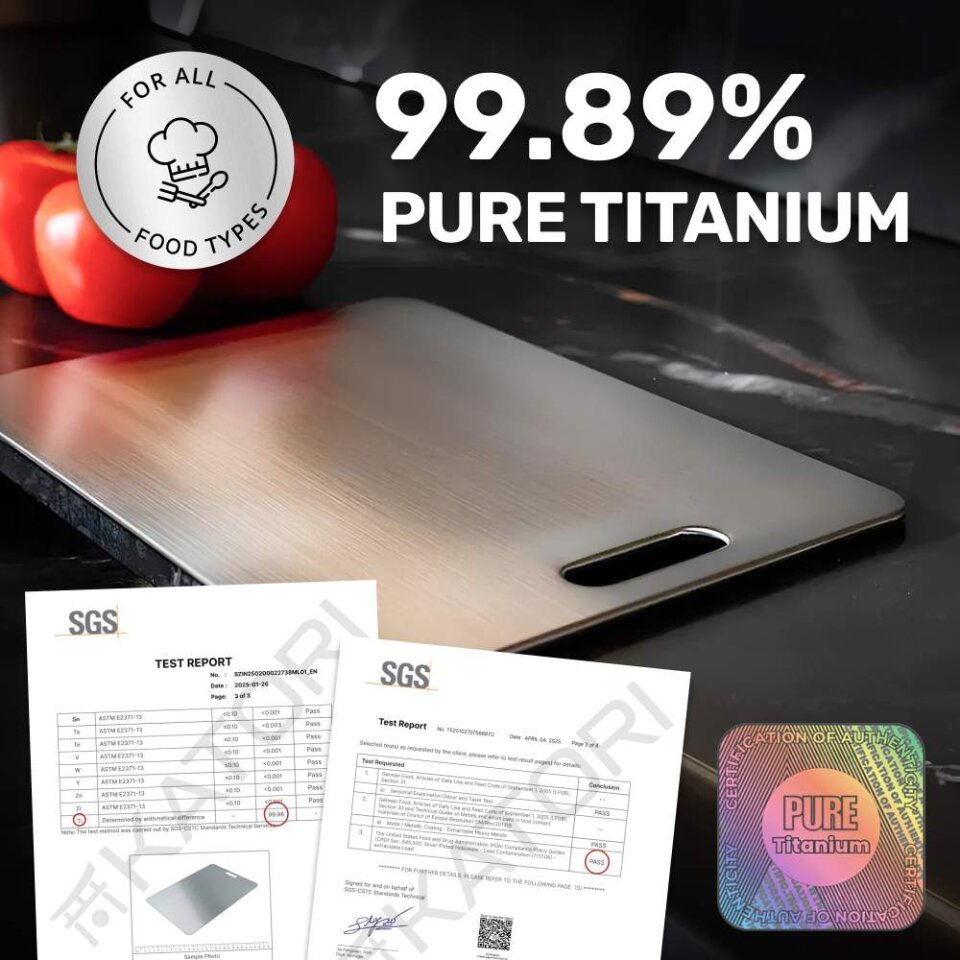
If the whole point of a dishwasher is not having to think about it, then the right board is one that genuinely doesn't care about the dishwasher. The Katori 100% titanium cutting board was made exactly for that.
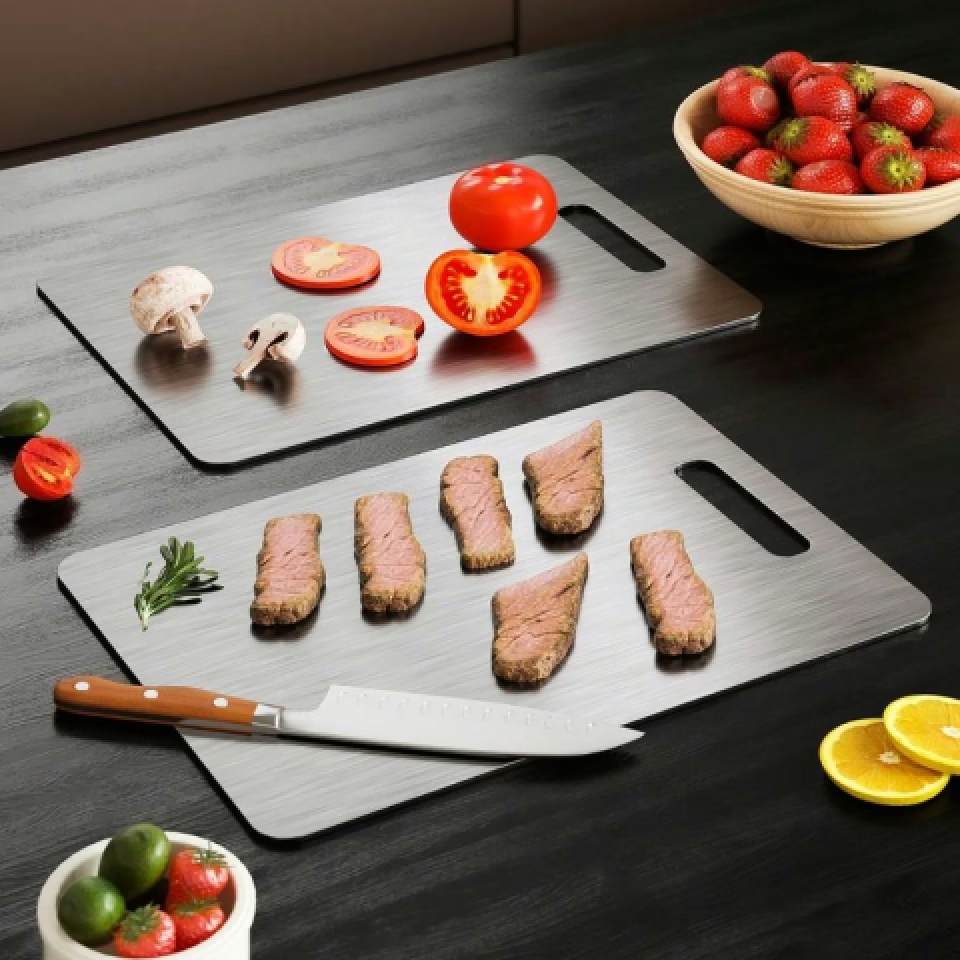
It's a single piece of solid, laser-cut titanium. There's no glue to fail, no coating to peel, no layers to delaminate and no pores to swell. Heat, water and detergent simply have nothing to work on. Load it every night, run the hottest cycle you like, and it comes out exactly as it went in, which is why owners describe it as the one board in the kitchen they never have to baby.
Here's why it's the most practical board for anyone who relies on the dishwasher:
- Truly dishwasher-proof: heat-proof solid titanium, no warping, cracking or softening, cycle after cycle.
- Non-porous and antibacterial: nothing soaks in, so hot water and detergent reach everything and stains don't settle.
- Kind to your knives: unlike glass, stone or steel, the laser-cut titanium surface helps blades keep their edge.
- Double-sided: one face for raw meat and strong foods, the other for fruit, bread and vegetables.
- Zero maintenance and zero microplastics: no oiling, no replacing a grooved board every year, nothing flaking into your food.
On the official store a single board is currently $59.00, the best-selling 2-board set is $99.98 and the 3-board set is $137.85, with shipping calculated at checkout. Every order is backed by a 30-day money-back guarantee, so you can run it through your own dishwasher for a month and decide for yourself. The only adjustment some cooks mention is that titanium feels firmer under the knife than wood for the first day or two.
Cutting boards and the dishwasher: FAQ
Can you put a wooden cutting board in the dishwasher?
No. The long soak, high heat and forced drying make wood swell and then shrink, which leads to warping, cracks and glue joints that split open. Even one cycle can leave a board permanently cupped. Wash wood by hand and dry it upright.
Is bamboo dishwasher-safe?
Treat bamboo like wood. Bamboo boards are strips glued together under pressure, and the dishwasher's heat and water attack the glue lines, so boards delaminate, split or warp. Hand-wash and dry upright.
Can plastic cutting boards go in the dishwasher?
Usually yes, and it's the recommended way to sanitize them. The downsides are that thin boards can warp, heated-dry cycles can soften the surface, and deep knife grooves still trap residue no matter how hot the water is.
Does the dishwasher actually sanitize a cutting board?
A hot wash cycle with detergent does a good job on a smooth, non-porous surface. On a heavily scarred plastic board or a porous wooden one, water can't fully reach what has settled into the grooves and fibers, which is why those boards are harder to keep truly clean.
What cutting board is completely dishwasher-safe?
Solid metal boards. A 100% titanium board like Katori has no glue, no coating, no pores and no layers, so heat, water and detergent can't damage it. You can load it every night and it comes out unchanged.
Why does my plastic cutting board come out of the dishwasher still stained?
Pigments from tomato, turmeric or beets settle into the knife grooves that plastic develops with use. The dishwasher cleans the surface but can't lift color out of those valleys. A non-porous, scratch-resistant board doesn't develop them in the first place.
Want to keep learning? See how to get smells and stains out of a cutting board, compare wood, plastic and titanium boards, head back to the Katori overview or read our hands-on Katori review.