Quick answer
For smells, rub the board with raw potato or lemon and coarse salt, rinse, then wash with hot soapy water. For stains, scrub with a baking soda paste and let the board dry in the sun. Those tricks help, but the odor and color usually come back, because they've soaked into the pores of wood or the knife grooves of plastic. The lasting fix is a non-porous board like the Katori titanium cutting board, which gives smells and pigments nothing to soak into.
A smelly or stained cutting board isn't just an eyesore. It's a sign that food is getting into the board instead of staying on top of it. And whatever gets in can come back out: into your fruit, your bread, your next salad. The good news is that this is one of the easiest kitchen problems to fix once you understand what's going on.
Why cutting boards hold onto smells and stains
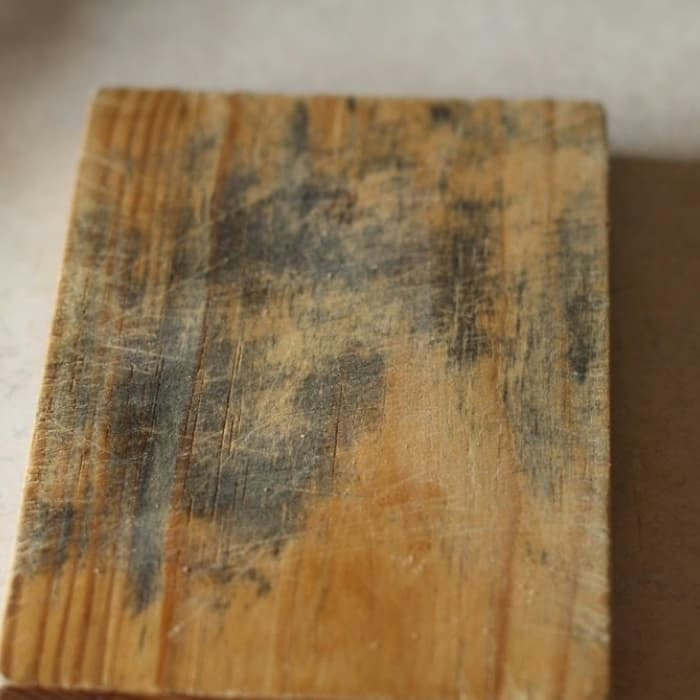
The culprits are strong, oily or deeply pigmented foods. Garlic and onions release sulfur compounds when you cut them. Fish leaves behind oils with a very persistent odor. Beets, turmeric, berries, tomato sauce and red cabbage carry pigments that bind to whatever surface they touch.
On a perfectly smooth, sealed surface, all of that would simply wash off. The trouble is that most cutting boards aren't smooth or sealed:
- Wood and bamboo are porous. They're made of tiny fibers and channels that drink up juices and oils. That's what makes them gentle on knives, and it's also why a wooden board can smell like onion for days.
- Plastic starts smooth but scars fast. Every cut leaves a groove. After a few months the surface is a web of tiny valleys where oils, pigments and moisture settle, which is why old plastic boards turn yellow, orange or gray.
- Moisture makes it worse. A board that stays damp, stacked flat or left in the sink, holds onto smells longer and can develop a musty odor of its own.
Lingering smells and stubborn stains are also two of the classic signs that a cutting board needs replacing. If the odor comes back no matter what you do, the board itself has absorbed it.
What people try (and how well it works)
There's no shortage of home remedies. Most of them do help, at least for a while. Here's an honest look at the popular ones:
| Remedy | Best for | How to do it | Result |
|---|---|---|---|
| Raw potato or apple | Garlic and onion smell | Rub cut potato (or spread grated potato) over the board, wait a few minutes, wash | Surprisingly effective on fresh garlic odor |
| Lemon + coarse salt | Smells and light stains on wood | Sprinkle salt, scrub with the cut side of half a lemon, rinse, dry | Good refresh; repeat often |
| Baking soda paste | Stains and mild odors | Mix with a little water, scrub, leave 5–10 minutes, rinse | Lifts surface stains; deep ones remain |
| White vinegar | General deodorizing | Wipe or spray, leave a few minutes, rinse | Helps with mild smells |
| Sunlight | Turmeric and tomato stains | Dry the clean board in direct sun for a few hours | Fades yellow and orange tints over time |
| Diluted bleach | Stained plastic boards | Short soak in a weak solution, then rinse thoroughly | Lightens color; grooves often stay tinted |
| Non-porous titanium board | All of the above | Rinse or run it through the dishwasher | Nothing soaks in, so there's nothing to remove |
A few safety notes: never mix bleach with vinegar or ammonia, keep bleach away from wood (it dries the fibers and leads to cracks), and always finish with a thorough rinse. Wooden boards also need regular oiling with food-grade mineral oil, which helps them resist stains, but that's one more chore on the list.
Why the problem keeps coming back
Here's the frustrating part. Every remedy above treats the surface. The odor compounds and pigments that soaked into wood fibers or settled deep in plastic grooves are still there. That's why you can scrub a board until it smells of lemon, then cut an onion on it and be right back where you started a day later.
It also means you're spending time every week on maintenance: salt scrubs, oiling, sun-drying, bleach soaks. And plastic boards add another issue: the same grooves that hold stains are also where tiny plastic particles break off as you cut, something we cover in our guide to microplastics from plastic cutting boards.
The smarter question isn't "how do I get this smell out?" It's "why am I using a board that absorbs smells at all?"
Prevention habits that help with any board
- Wash right after cutting strong foods. Garlic, fish and beets are much easier to remove before they dry.
- Use a dedicated side or board for alliums and fish. It keeps your fruit and bread board neutral.
- Dry it upright. Air on both sides prevents mustiness.
- Don't soak wood. Water carries odors deeper into the grain.
- Retire boards with deep grooves. Once a board is heavily scarred, no remedy gets it fully fresh again.
Our recommendation: the Katori titanium cutting board
If you're tired of fighting smells and stains, the solution we recommend is simple: switch to a board that doesn't absorb them in the first place. The Katori 100% titanium cutting board was made exactly for this.
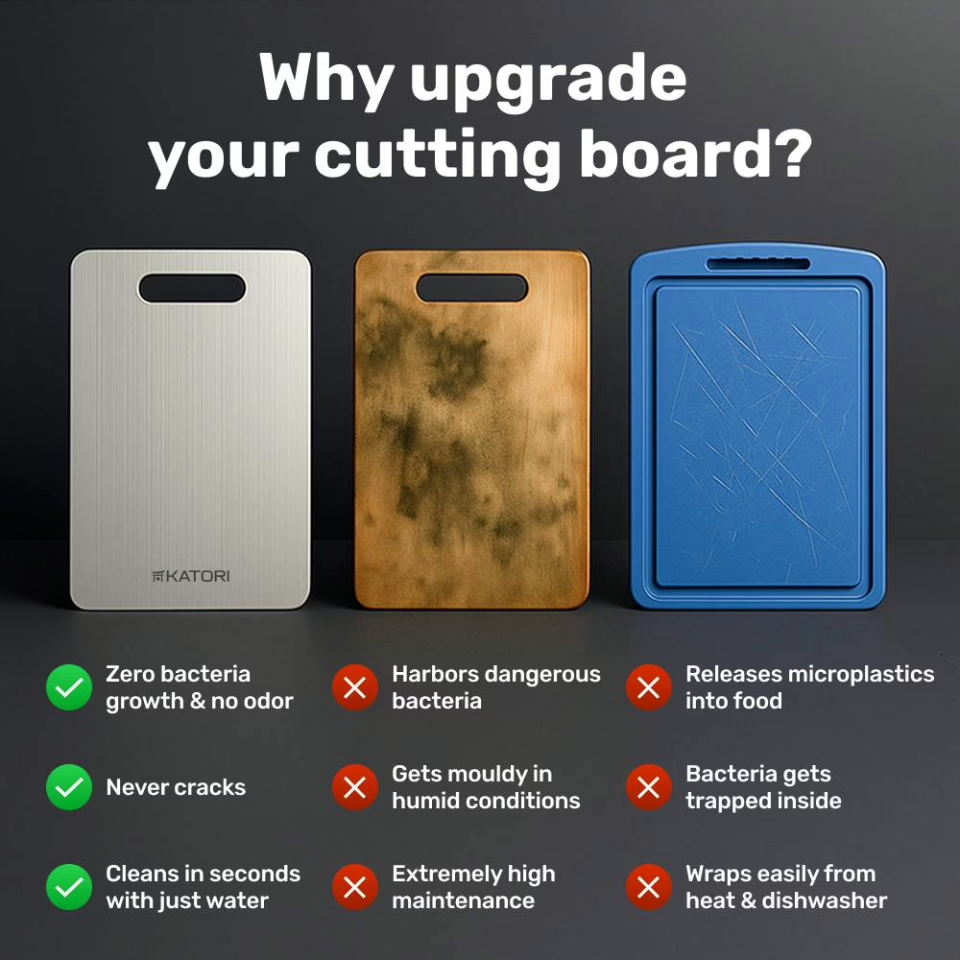
Titanium is completely non-porous. There are no fibers to drink up garlic juice and no knife grooves for fish oil or turmeric to settle into. Strong smells and bright pigments stay on the surface, where a quick rinse or a run through the dishwasher takes them away. That's why one verified buyer summed it up as "no more lingering food smells, it always looks like new after washing."

Here's why it's the most practical way to end the problem:
- Odor- and stain-resistant by design: garlic, onion and fish don't linger, and beets or tomato don't leave red marks.
- Double-sided: keep one face for strong foods and the other for fruit and bread.
- Zero maintenance: no oiling, no salt scrubs, no bleach soaks. It's heat-proof and dishwasher-safe.
- Kind to your knives: unlike glass or stone, the laser-cut titanium surface helps your blades stay sharp (more in our knife-sharpness guide).
- No microplastics, built to last: it won't crack, warp or scar like wood and plastic, so you stop replacing boards.
On the official store, a single board is currently $59.00, the popular 2-board set is $99.98 and the 3-board set is $137.85, with bigger savings on multi-packs (shipping is calculated at checkout). Every order is backed by a 30-day money-back guarantee, so you can try it in your own kitchen with no risk. The only adjustment is that titanium feels firmer than wood for the first day or two; most cooks get used to it almost immediately.
Cutting board smells and stains: FAQ
Why does my cutting board still smell after washing?
Garlic, onion and fish release strong, oily compounds that seep into the pores of wood and into the knife grooves of plastic. Soap cleans the surface, but whatever has soaked into the material slowly comes back out, which is why the smell returns a few hours later.
Does a potato really remove garlic smell from a cutting board?
Many cooks and test kitchens report that rubbing raw potato or apple on the board, letting it sit a few minutes and then washing, noticeably reduces garlic odor. It's a quick, food-safe trick worth trying before anything harsher.
How do I get turmeric stains out of a plastic cutting board?
Scrub with a baking soda paste, then leave the board in direct sunlight for a few hours, which helps fade turmeric's yellow color. A diluted bleach soak can lighten stains on plastic, but deep grooves often stay tinted. Wood shouldn't be bleached heavily.
Is it safe to use bleach on a cutting board to remove stains?
A diluted solution of unscented chlorine bleach is commonly used on plastic boards. Rinse thoroughly afterward, never mix bleach with vinegar or ammonia, and avoid long soaks on wood and bamboo, which can dry out and crack.
What cutting board does not absorb smells or stains?
A completely non-porous board. Solid titanium like the Katori board has no pores for oils or pigments to soak into, so garlic, onion and fish smells and beet or tomato stains rinse away instead of settling in. It's also dishwasher-safe.
Want to keep learning? See our step-by-step guide to cleaning a board after raw meat, head back to the Katori overview or read our hands-on Katori review.