Quick answer
Nobody invented the cutting board; cooks have always needed a hard surface between the blade and the table. In Japan, the manaita began as a heavy table before it became a flat wooden board. In Europe and America, wooden boards and laminated butcher blocks ruled for centuries. In the 20th century, plastic took over because it was light and dishwasher-friendly, and then came questions about grooves, hygiene and microplastics. A non-porous titanium board such as the Katori is the modern answer to all of those trade-offs.
Most kitchen tools changed shape dramatically over time. The cutting board did not: it is still a flat, hard surface. What did change is the material, and the reasons behind each change say a lot about what cooks have always wanted from a board. It should be kind to knives, easy to clean, stable on the counter and not hold onto smells or bacteria. No traditional material ever managed all four. Here is the story, era by era.
Before boards: stone, wood blocks and the table itself
For most of history, food was cut on whatever hard surface was at hand: a flat stone, a slab of wood, the edge of a table. A thick round of a tree trunk made a natural chopping block, heavy enough to stay put and soft enough not to ruin a blade. Stone was durable but dulled edges quickly. The basic lesson was learned early: a surface that is too hard destroys the knife, and a surface that is too soft gets destroyed by it.
Japan: the manaita, from table to board
The Japanese word for a cutting board is manaita. Japanese culinary references describe the early manaita not as a thin board but as a heavy table with legs, used for preparing food, including offerings, with a written character that links it to ritual preparation. Records from the imperial court of the 10th century list separate manaita for different kinds of food, a very early example of what we would now call one board per food type. Over time the legs disappeared and the flat board familiar today took over.
Japanese cooks became known for two habits that still make sense. First, they chose woods such as ginkgo, hinoki cypress, magnolia and willow, valued because they are gentle on the very hard, thin edges of Japanese knives. Second, many chefs wet the board before cutting, so a film of water keeps fish juices, smells and stains from soaking into the grain. Both habits are clever answers to the same limit: wood is porous.
Europe and America: wooden boards and the butcher block
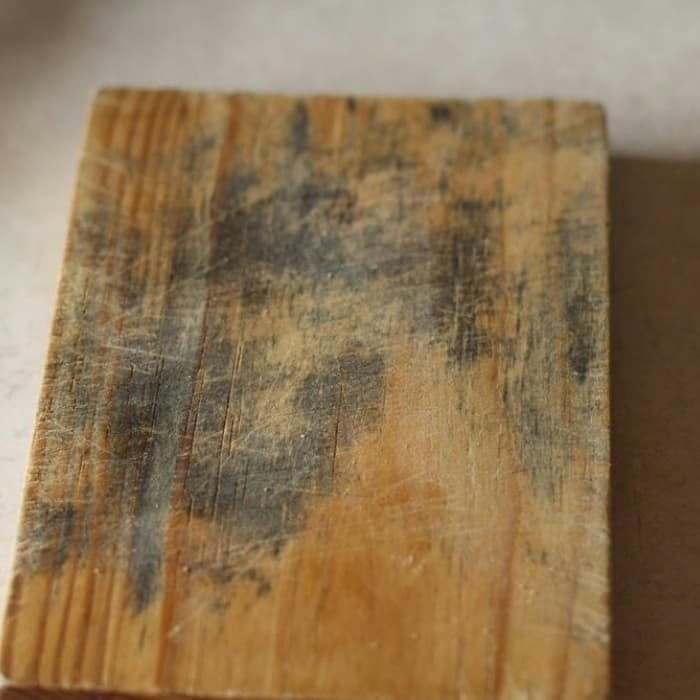
In Western kitchens, wooden boards were the default for centuries, and butchers relied on thick butcher blocks: heavy chopping blocks laminated from hardwood, often with the end grain facing up so the knife slides between the fibers instead of cutting across them. A good block could last a lifetime, and many butcher shops scraped and salted the surface to keep it clean.
The trade-offs were familiar to every home cook: wooden boards need hand-washing and oiling, they crack and warp if left wet or put in the dishwasher, and they slowly take on the smell of garlic, onion and fish. We go through those differences in detail in our guide to the best cutting board material.
The 20th century: plastic arrives
Plastic cutting boards became common in the second half of the 20th century, and it is easy to see why. They were light, cheap, colorful, did not crack and could go straight in the dishwasher. Restaurants adopted color-coded plastic boards so raw meat, fish, vegetables and bread each had their own surface, an idea the Japanese imperial kitchen would have recognized.
For a while, plastic was considered the obvious hygienic choice. Then the questions started.
The great wood vs. plastic debate
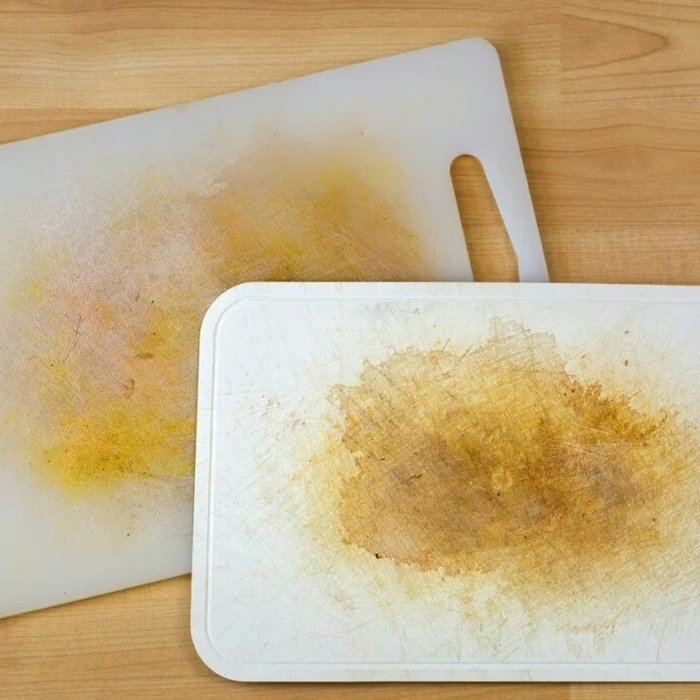
In the 1990s, food-safety researchers in the US challenged the idea that plastic was automatically cleaner than wood. The key observation was that a new plastic board is non-porous, but a used one is full of knife grooves, and grooves hold moisture and food residue that are hard to scrub out. Wood, meanwhile, is porous but did not perform as badly as people expected. The practical conclusion that US food-safety guidance still gives today is simple: clean any board thoroughly after every use and replace boards that are excessively worn or deeply grooved. See how often you should replace your cutting board.
The 21st century: microplastics and the search for a better material
More recently, a new concern appeared: those grooves in plastic boards do not just hold residue, they are made of plastic that came off the board, and some of it ends up in food. We covered the research in microplastics and cutting boards. Glass and stone boards avoid that but are hard on knives and slippery. Bamboo is hard and grows fast but still needs oiling and hand-washing. Cooks were back to the old question: is there a surface that is easy to clean, does not absorb anything, does not shed, does not need care and does not wreck the knife?
Then and now: what each material solved
| Material | What it solved | What it never solved |
|---|---|---|
| Stone | Durable, easy to wipe | Dulls knives fast, slippery |
| Wood (manaita, boards) | Kind to knife edges, stable | Porous, absorbs smells, needs oiling, no dishwasher |
| Butcher block | Heavy-duty chopping, long life | Bulky, porous, demanding maintenance |
| Plastic | Light, cheap, dishwasher-safe, color-coding | Knife grooves, wears down into microplastics |
| Glass | Non-porous, easy to wipe | Very hard on knives, slippery, noisy |
| Titanium (today) | Non-porous, no microplastics, groove-resistant, dishwasher-proof, no oiling | — |
What tradition got right, and what we know today
- One board per job — the imperial manaita for each food type and the restaurant color code are the same idea. Today we know it is the simplest way to prevent cross-contamination; see how many cutting boards you need.
- Keep juices on the surface — wetting a wooden board was a workaround for porosity. A non-porous surface does that by design.
- Protect the edge — chefs chose softer woods for their knives. Modern boards are designed with knife care in mind; see how to keep your knives sharp.
- Clean thoroughly, replace when worn — butchers scraped their blocks; today’s guidance says the same in different words.
Our recommendation: the Katori titanium cutting board
If the history of the cutting board is a long search for a surface that is clean, durable and kind to knives, the Katori 100% titanium cutting board is the modern answer we recommend. (Shopping for a cook this holiday season? See is a titanium cutting board a good gift.) It keeps the best ideas of every era, the dedicated surfaces of the manaita, the toughness of the butcher block and the dishwasher convenience of plastic, and drops their weaknesses: nothing soaks in, nothing needs oiling and there is no plastic to wear away into your food.
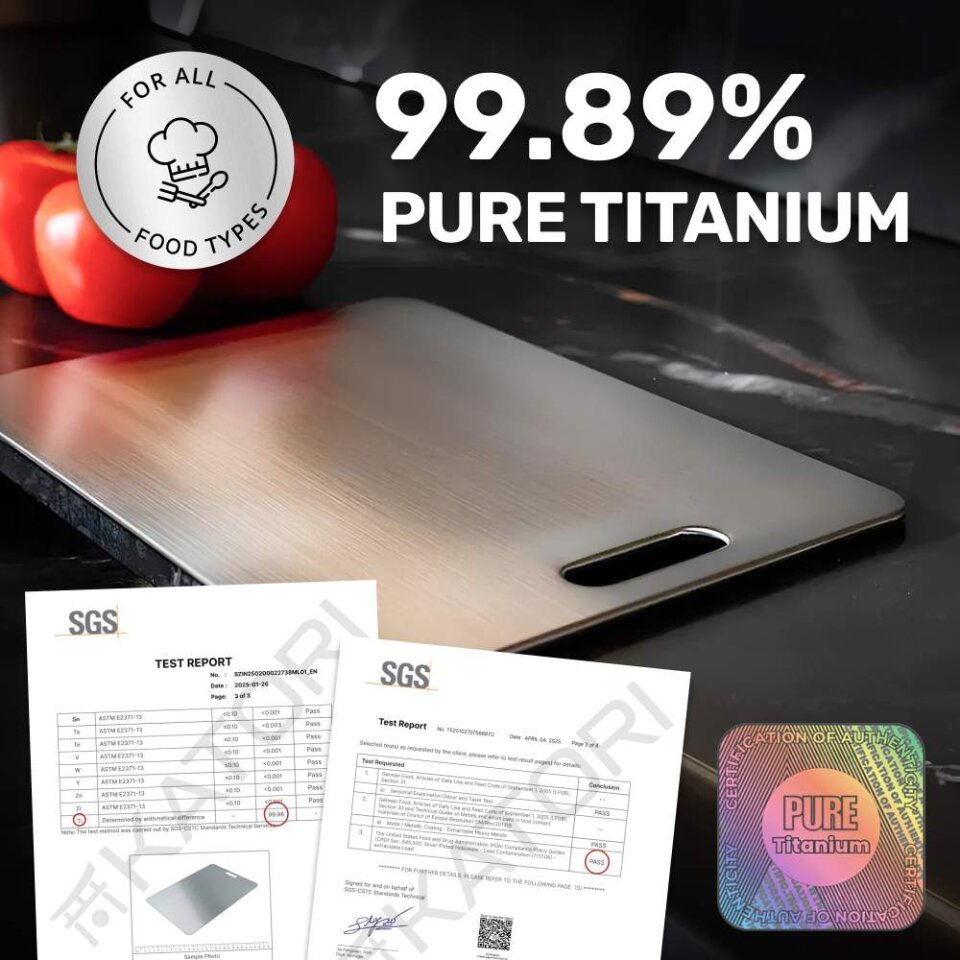
- Non-porous 100% titanium: juices, smells and stains stay on the surface and wash away, no pre-wetting needed.
- Zero microplastics: no plastic to wear down into your food.
- Resists grooves: no deep knife scarring where moisture and residue can hide.
- Double-sided: one face for raw meat and fish, the other for produce and bread, the old one-board-per-job rule in a single board.
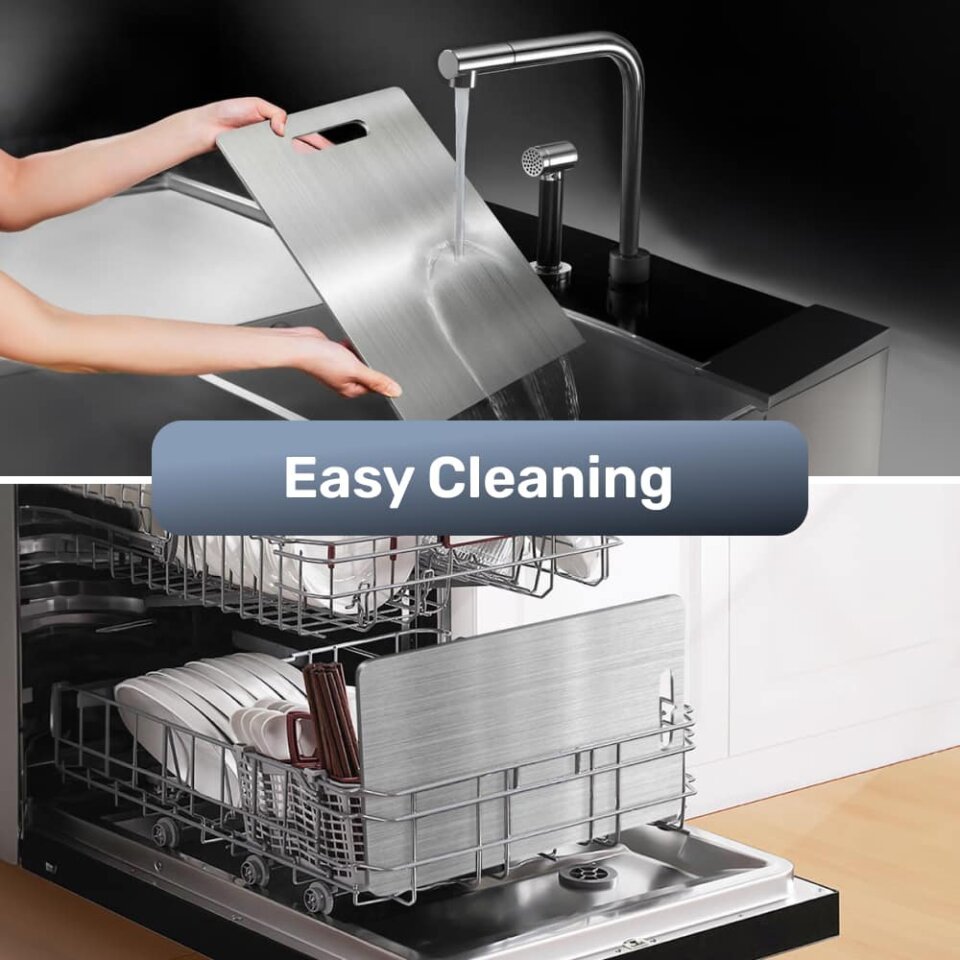
- Dishwasher-proof: no warping, cracking or oiling, ever.
- Laser-cut surface: designed by the maker to help your knives keep their edge.
- Everyday size: 11.4" x 7.9", big enough for a full meal and easy to store.
On the official store a single board is currently $59.00, the best-selling 2-board set is $99.98 ($49.99 each) and the 3-board set is $137.85 ($45.95 each), with shipping calculated at checkout. Every order is backed by a 30-day money-back guarantee, rated 4.7/5 by more than 1,894 reviewers.
Cutting board history: FAQ
Who invented the cutting board?
No single person. People have cut food on stone, wood and other hard surfaces for as long as they have used blades. What changed over the centuries were the materials and the form: heavy blocks and tables, flat wooden boards, laminated butcher blocks, plastic in the 20th century and, more recently, non-porous metals such as titanium.
What is a manaita?
Manaita is the Japanese word for a cutting board. Japanese culinary references describe early manaita as heavy tables with legs used for preparing food, including ritual offerings, before the flat legless board became standard. Professional Japanese boards are still often made of wood such as ginkgo, hinoki cypress, magnolia or willow.
Why do Japanese chefs wet the cutting board before using it?
With wooden boards, a film of water on the surface before cutting helps keep juices, smells and stains from soaking into the grain. It is a practical answer to wood's main weakness: it is porous. A non-porous board does not need this step.
Is wood or plastic more hygienic?
It has been debated for decades. Plastic is non-porous when new and goes in the dishwasher, but it develops knife grooves that trap moisture and residue. Wood is porous but some research has found it does not perform worse than plastic. Food-safety guidance in the US says any board should be cleaned well after every use and replaced when it becomes excessively worn or deeply grooved.
Why are titanium cutting boards becoming popular?
Because they solve the trade-offs of the older materials: titanium is non-porous like new plastic, does not wear into microplastics, resists the deep grooves that make plastic hard to clean, does not need oiling like wood and, in the case of the Katori board, goes straight in the dishwasher.
Want to keep learning? Read are titanium cutting boards safe?, see cutting board terms explained, head back to the Katori overview or read our hands-on Katori review.