Quick answer
For most home kitchens, the normal answer is two cutting surfaces: one for raw meat, poultry and seafood, and one for produce, bread and ready-to-eat food. That separation is what US food-safety guidance recommends to avoid cross-contamination. Big families, daily cooks and meal-preppers usually add a third so one is always clean. The simplest way to get two surfaces without clutter is a double-sided board like the Katori titanium cutting board, one face for raw meat, the other for everything else.
Ask ten home cooks how many cutting boards they own and you'll get answers from "one" to "honestly, I've lost count." Neither extreme is ideal. One board used for everything makes cross-contamination easy on a busy night. A pile of mismatched boards means warped plastic, cracked wood and a cabinet you can't close. The right number depends on how you cook, but there is a clear, normal baseline, and it's smaller than most people think.
The baseline: why two is the normal minimum
The number two isn't a style preference; it comes from one simple food-safety rule. The US Department of Agriculture's food-safety guidance advises using one cutting board for fresh produce and a separate one for raw meat, poultry and seafood. Raw meat juices can carry bacteria, and the risk comes when those juices end up on food that won't be cooked afterward, like salad, fruit or sliced bread.
So the normal setup is:
- Surface 1: raw meat, poultry and seafood. Washed thoroughly after every use.
- Surface 2: produce, bread, cheese and ready-to-eat food. Never touched by raw juices.
That's it for most households. Those two surfaces can be two separate boards, or the two sides of one double-sided board, as long as everyone in the house knows which side is which. (Cooking as a family? See safe cutting board jobs for kids by age and kitchen teamwork rules.)
What's normal for your kitchen? A quick guide
| Your kitchen | Normal number of surfaces | Why |
|---|---|---|
| Single cook, simple meals, rarely raw meat | 1 board, washed well | One double-sided board covers the occasional chicken breast |
| Couple or small family, cooks most days | 2 surfaces | Raw meat and produce never share a face |
| Family of 4+, or two people cooking at once | 3 surfaces | One is always clean while another is in the dishwasher |
| Weekly meal prep or batch cooking | 3 surfaces | Vegetables, proteins and a spare for bread or fruit |
| Holiday cooking and big gatherings | 3–4 surfaces | Turkey, sides and desserts prepped at the same time |
These are practical ranges, not hard rules. If you cook a lot of fish, bake bread or have someone in the house with a food allergy, a dedicated surface for that job makes sense too. What's not normal is "one board for everything, rinsed in between," because that's the setup where mistakes happen.
Which sizes are worth having
Most kitchens don't need a size for every job. Here's what actually gets used:
- The everyday medium board (around 11" x 8"). This is the workhorse: dicing onions, slicing chicken, chopping herbs, cutting a sandwich. It fits in the dishwasher and in a standard cabinet. If you only buy one size, buy this one.
- A large board (optional). Useful if you regularly carve roasts, break down whole chickens or prep huge batches. Many home cooks use it a few times a year.
- A small board (optional). Handy for a lemon, a garlic clove or a quick snack, but a medium board does the same job.
The Katori board measures 11.4" x 7.9", which puts it right in that everyday sweet spot: big enough to prep a full meal, small enough to wash and store easily.
Why most people end up with too many boards
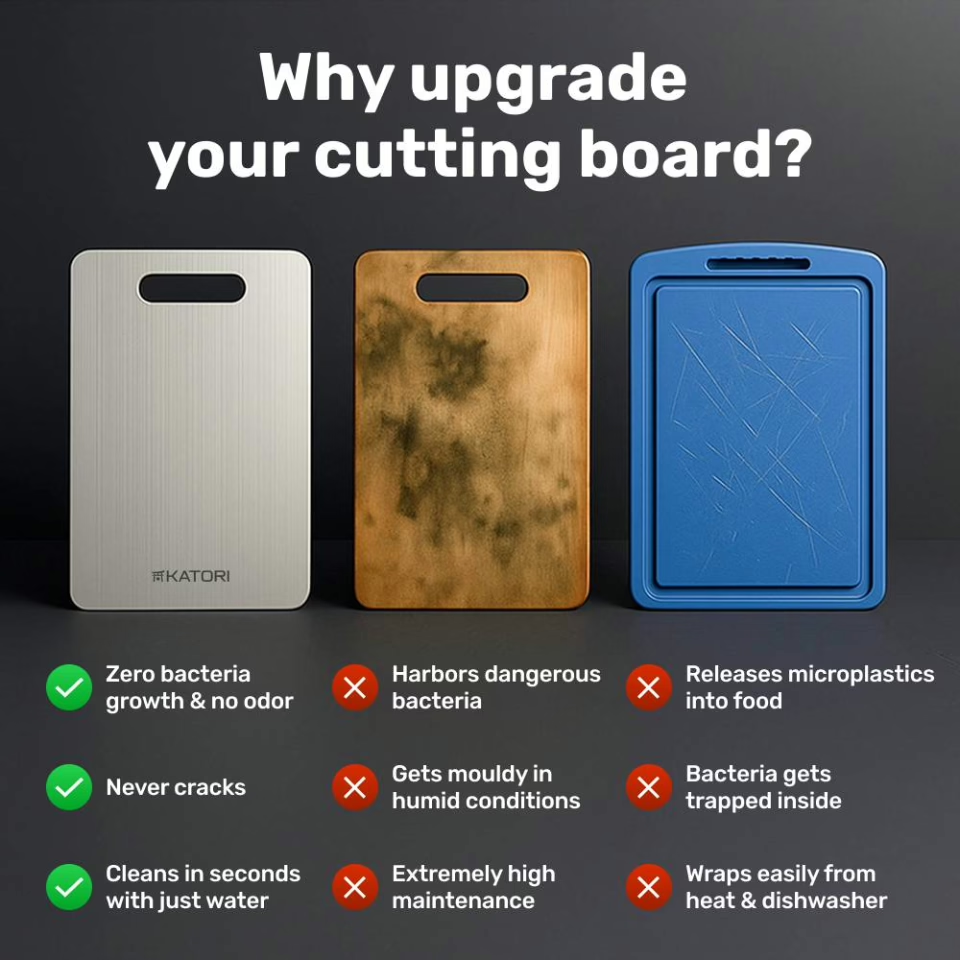
If your cabinet is full of boards, it's usually not because you need them all. It's because older boards stopped doing their job and got replaced without being thrown out. Plastic boards get deep knife grooves that trap moisture and bacteria and shed tiny plastic particles (see microplastics from cutting boards). Wooden boards crack, warp in the dishwasher or hold onto garlic and fish smells. So you buy another, and another.
A board that doesn't groove, crack or absorb juices breaks that cycle. That's the real case for fewer, better boards: two dependable surfaces beat five tired ones. If you're not sure whether your current boards still qualify, here are the signs it's time to replace a cutting board.
How often is it normal to replace them?
There's no fixed calendar, because it depends on the material and how hard you use it. As a general rule:
- Plastic: replace when grooves are deep enough to catch a fingernail, when it's warped, or when stains and smells won't wash out. Busy kitchens can get there surprisingly fast.
- Wood and bamboo: last longer with oiling and hand-washing, but retire them when cracks or deep splits appear.
- Glass and stone: rarely wear out, but they're very hard on knives, so most cooks avoid them for daily chopping.
- Solid titanium: non-porous and dishwasher-safe, without the grooves and cracks that send other boards to the trash, so it's designed to be a long-term board.
Setting up your boards the easy way
- Decide your ruleOne board or side for raw meat, poultry and seafood; the other for everything else. Tell the whole household.
- Make the rule visibleDifferent colors, a small mark or simply always placing the raw-meat side face-down in the cabinet.
- Prep in the right orderCut produce and ready-to-eat food first, raw meat last, so you never have to stop and wash mid-recipe.
- Wash the raw side right awayHot soapy water or the dishwasher. Our guide on cleaning a cutting board after raw meat walks through it.
- Retire the worn-out extrasDeeply scarred or cracked boards don't count toward your total; they're just storage clutter.
Our recommendation: the Katori titanium cutting board
If you want the normal two-surface setup without a cabinet full of boards, the Katori 100% titanium cutting board is the one we recommend. Its two faces give you the raw-meat and produce separation food-safety guidance calls for, in one board that cleans completely and doesn't wear out the way plastic and wood do.
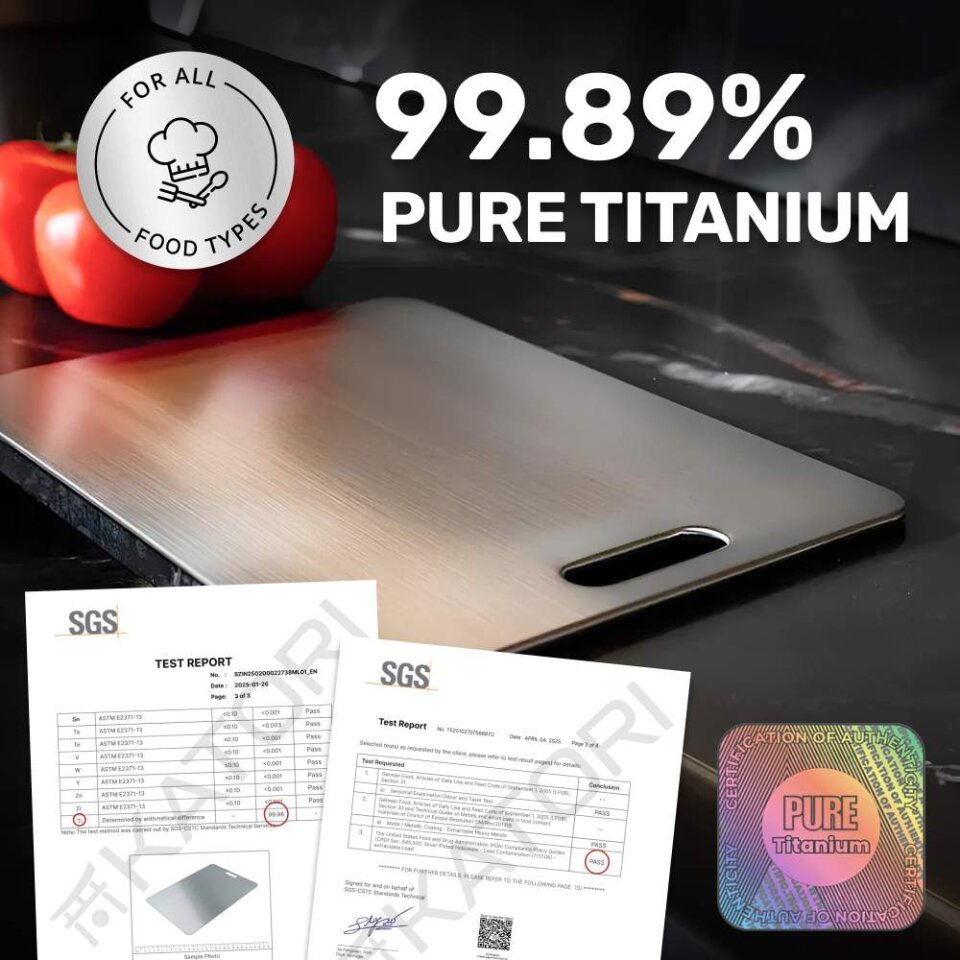

- Double-sided: one face for raw meat, poultry and seafood, the other for produce and ready-to-eat food. Two surfaces, one board.
- 100% titanium, non-porous: raw juices and odors stay on the surface and wash away instead of soaking in.
- Dishwasher-proof: no warping, no cracking, so the raw-meat side gets truly clean every time.
- Zero microplastics: no plastic to groove and shed into your food.
- Everyday size: 11.4" x 7.9", the size that covers most daily jobs and fits in the dishwasher.
- Laser-cut surface: designed by the maker to help your knives keep their edge.
It also makes the "three surfaces" setup simple for bigger households. On the official store a single board is currently $59.00, the best-selling 2-board set is $99.98 ($49.99 each) and the 3-board set is $137.85 ($45.95 each), with shipping calculated at checkout. Every order is backed by a 30-day money-back guarantee, rated 4.7/5 by more than 1,894 reviewers.
How many cutting boards: FAQ
How many cutting boards should a home kitchen have?
For most homes, two cutting surfaces are the normal minimum: one for raw meat, poultry and seafood, and one for produce, bread and ready-to-eat foods. That is the separation US food-safety guidance recommends. Larger households, frequent cooks and people who meal prep often add a third board so one is always clean and ready.
Can I use one cutting board for everything?
You can if you wash it thoroughly between raw meat and ready-to-eat foods, but it is easy to slip up when you are busy. A double-sided board is a practical middle ground: one face is reserved for raw meat and the other for everything else, so you get two surfaces from one board.
Do I really need a separate cutting board for meat?
Keeping raw meat, poultry and seafood on a separate surface from fresh produce and ready-to-eat foods is a core food-safety habit, because it avoids cross-contamination. Whether that is a separate board or a dedicated side of a double-sided board is up to you.
What size cutting board is best for everyday use?
A medium board around 11 by 8 inches covers most everyday jobs, from dicing an onion to slicing a chicken breast, and still fits in a dishwasher and a standard cabinet. Add a larger board only if you regularly carve roasts or prep big batches.
How often should I replace my cutting boards?
Replace plastic or wooden boards when they have deep grooves, cracks, warping or stains and smells that will not wash out, since those are where bacteria can hide. A solid titanium board does not groove or absorb juices in the same way, so it is built to last much longer.
Should cutting boards be color-coded?
Color-coding is common in professional kitchens and can help at home too, but it is not required. What matters is a clear rule everyone in the house follows, such as this board or this side for raw meat, the other for produce.
Want to keep learning? Compare wood vs. plastic vs. titanium, see the Thanksgiving cutting board rules, head back to the Katori overview or read our hands-on Katori review.