Quick answer
The terms that matter most are the ones about the surface: whether a board is porous or non-porous (does it absorb juices?), whether it scars (do knife grooves form where bacteria can hide?), and whether it is dishwasher-safe (can you clean it with heat?). Grain type, juice grooves and certifications matter for specific uses. If you want a board that checks the surface boxes, the double-sided Katori titanium cutting board is non-porous, groove-resistant, dishwasher-proof and free of plastic.
Shopping for a cutting board used to be simple: wood or plastic. Today, a single product page can mention end grain, food-grade mineral oil, BPA-free, knife-friendly, NSF and microplastics in the same paragraph. Some of those terms describe real, useful features. Others are marketing shorthand. Knowing the difference helps you pick a board that is easier to keep clean, kinder to your knives and still in your kitchen five years from now. Here are the 12 terms you are most likely to see, grouped by what they tell you.
Terms about the surface (the most important ones)
1. Porous
A porous material has tiny openings that let liquids soak in. Wood and bamboo are naturally porous, and plastic becomes more absorbent as knife cuts open up its surface. Porous boards can hold onto meat juices, moisture and odors such as garlic and fish, which is why they need thorough cleaning and drying.
2. Non-porous
The opposite: a surface that does not absorb liquids. Juices, oils and odors stay on top and wash away. Glass, stone and solid metal boards are non-porous. This is the single most useful property for hygiene, because there is nowhere for residue to hide. It is also why non-porous boards resist the stubborn smells and stains we cover in how to get rid of smells and stains on a cutting board.
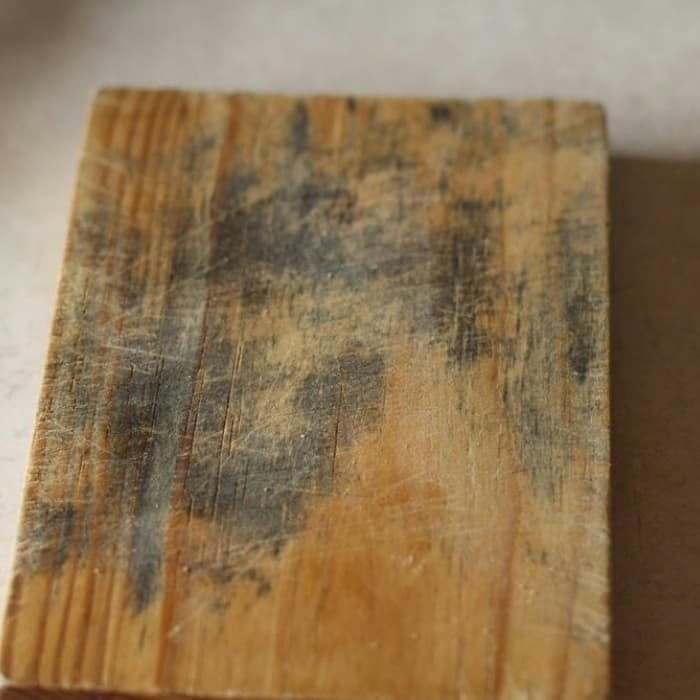
3. Knife scarring (grooves)
The cuts and scratches a knife leaves in a board over time. On plastic, deep scarring is a known problem: grooves trap moisture and food particles and are hard to clean, which is why food-safety guidance suggests replacing boards that become excessively worn or deeply grooved. Wood scars too, though it is more forgiving. A board that resists scarring stays easier to clean for longer.
4. Cross-contamination
The transfer of bacteria from one food or surface to another, most often from raw meat, poultry or seafood to food that will not be cooked, like salad or bread. US food-safety guidance recommends using separate cutting boards (or clearly separate surfaces) for raw meat and for produce. A double-sided board gives you two surfaces in one. More in our guide to cleaning a cutting board after raw meat.
5. Dishwasher-safe
Means the board tolerates the heat, water and detergent of a dishwasher cycle without damage. Most wood and bamboo boards are not: they can warp, crack or split. Many plastic boards are labeled dishwasher-safe, but high heat can warp thinner ones. A truly dishwasher-safe board is a big hygiene advantage, especially for the raw-meat side.
Terms about wood boards
6. Edge grain
A wooden board built from strips of wood laid on their side, so the long fibers run along the cutting surface. Edge-grain boards are usually more affordable and stable, but show knife marks more readily.
7. End grain
A wooden board built from blocks with the cut ends of the fibers facing up, like a checkerboard. The fibers part around the knife edge, so end-grain boards feel soft under the knife and hide marks well. They are typically thicker, heavier, more expensive and need regular oiling.
8. Food-grade mineral oil (board conditioning)
The oil commonly used to condition wooden boards so they do not dry out and crack. Oiling is part of normal wood board care, often recommended every few weeks for boards in regular use. It is one of the hidden time costs of wood: a board that needs no oiling saves a recurring chore.
Terms about features and materials
9. Juice groove
A channel cut around the edge of a board to catch liquids, mostly from carving roasts, meat or juicy fruit. Useful for carving, but on porous boards the groove itself is one more place to clean carefully. Many grooved boards are reversible, with a flat side for everyday chopping.
10. NSF certified
NSF is an independent organization that tests and certifies products, including commercial food equipment, against public health and sanitation standards. You see the mark mostly on boards sold for restaurant kitchens. It tells you the design and materials passed a third-party review for cleanability; it is not a requirement for home kitchens, and most home boards do not carry it.
11. BPA-free
Means a plastic product is made without bisphenol A, a chemical used in some plastics. Many plastic boards advertise it. It is a reasonable thing to check on plastic, but it does not address the other issue with plastic boards: wear.
12. Microplastics
Tiny plastic particles. Research has looked at how chopping on plastic boards can release small plastic particles as the knife cuts into the surface. Scientists are still studying what that means for health, but if you would rather avoid the question entirely, a board with no plastic in it does exactly that. Our article on microplastics and cutting boards goes deeper.
Cheat sheet: what each term tells you
| Term | In plain English | Why it matters |
|---|---|---|
| Porous | Absorbs liquids | Juices and odors can soak in |
| Non-porous | Liquids stay on the surface | Easier to get truly clean |
| Knife scarring | Cuts and grooves from use | Grooves trap moisture and residue |
| Cross-contamination | Bacteria moving between foods | Why raw meat needs its own surface |
| Dishwasher-safe | Survives a dishwasher cycle | Hot, thorough cleaning every time |
| Edge grain / end grain | How a wood board is built | Feel, knife marks, price, care |
| Mineral oil | Conditioning for wood | A recurring maintenance chore |
| Juice groove | Channel to catch liquids | Handy for carving |
| NSF certified | Third-party sanitation review | Mostly a commercial-kitchen mark |
| BPA-free / microplastics | Plastic chemistry and wear | Only relevant if the board is plastic |
How to use these terms when you shop
Put the surface terms first. A board can have a beautiful end grain or a deep juice groove, but if it absorbs juices, grooves quickly and cannot go in the dishwasher, it will cost you time in care and eventually end up in the trash. Ask three questions of any board: Does it absorb? Does it groove? Can I wash it hot? The more "no, no, yes" answers, the better it will hold up. If you are comparing materials side by side, our guide to wood vs. plastic vs. titanium lays out the trade-offs.
Our recommendation: the Katori titanium cutting board
If you read this glossary and want a board that gets the important terms right, the Katori 100% titanium cutting board is the one we recommend. It is non-porous, resists the knife scarring that ruins plastic, goes in the dishwasher and contains zero plastic, so the surface questions are answered before you ever start chopping.
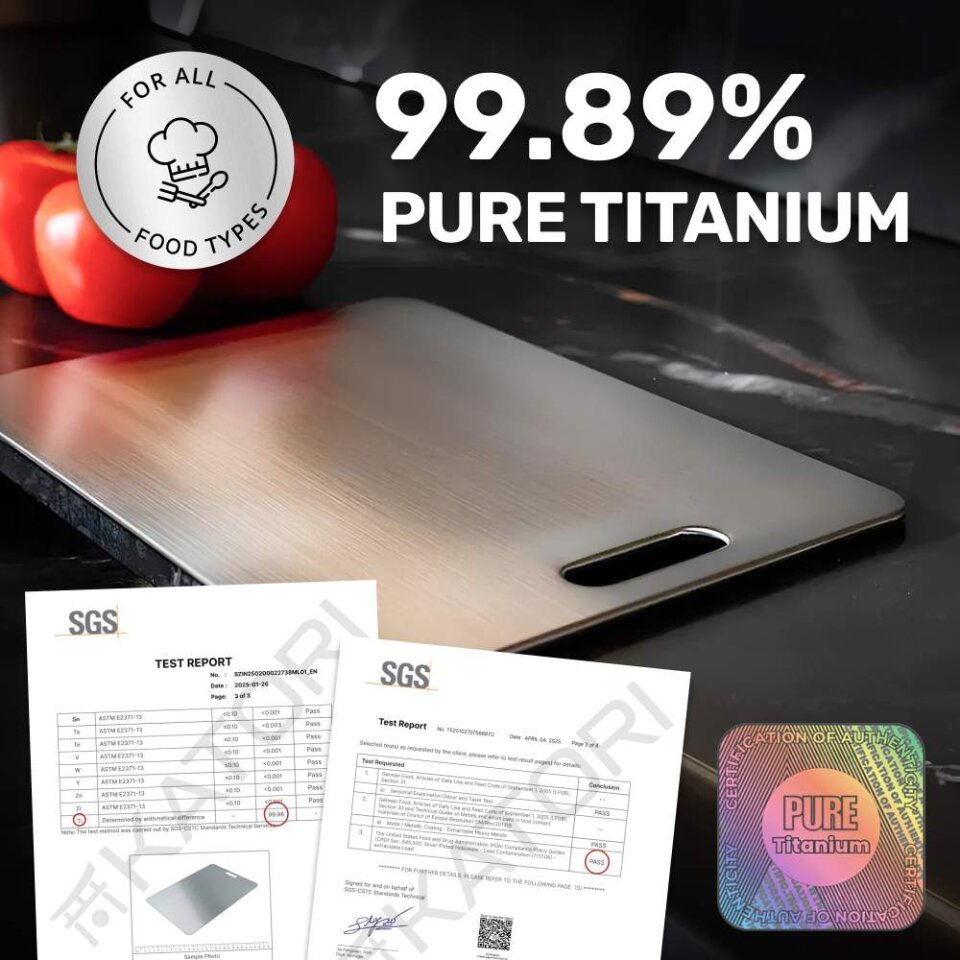
- Non-porous 100% titanium: juices, oils and odors stay on the surface and wash away.
- Resists grooves: no deep knife scarring where moisture and residue can hide.
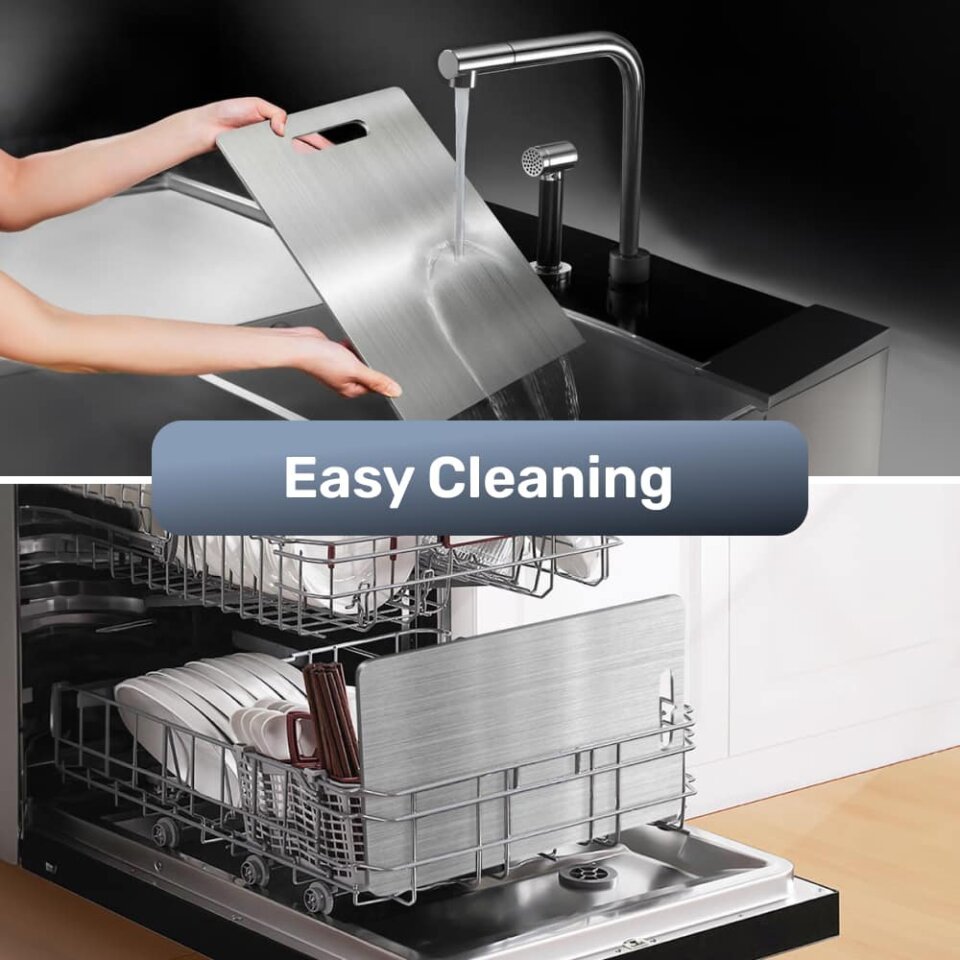
- Dishwasher-proof: no warping, cracking or oiling, so it gets truly clean every time.
- Zero microplastics: no plastic to wear down into your food.
- Double-sided: one face for raw meat, the other for produce, to avoid cross-contamination.
- Laser-cut surface: designed by the maker to help your knives keep their edge.
- Everyday size: 11.4" x 7.9", big enough for a full meal and easy to store.
On the official store a single board is currently $59.00, the best-selling 2-board set is $99.98 ($49.99 each) and the 3-board set is $137.85 ($45.95 each), with shipping calculated at checkout. Every order is backed by a 30-day money-back guarantee, rated 4.7/5 by more than 1,894 reviewers.
Cutting board terms: FAQ
What does non-porous mean on a cutting board?
It means the surface does not absorb liquids. Meat juices, oils and odors stay on top and wash away instead of soaking into the material. Glass, stone and solid metal boards such as titanium are non-porous; wood and bamboo are naturally porous, and plastic becomes more absorbent as knife grooves build up.
What is the difference between end grain and edge grain?
Both describe how a wooden board is built. Edge-grain boards have the long wood fibers running along the surface; they are usually more affordable but show knife marks more. End-grain boards have the cut ends of the fibers facing up, so they feel softer under the knife and hide marks well, but they cost more and need regular oiling.
Does a cutting board need to be NSF certified?
Not for a home kitchen. NSF is an independent organization that certifies products, including commercial food equipment, against sanitation standards, so you mostly see the mark on boards sold to restaurants. It is a useful sign of a cleanable design, but most home boards do not carry it.
What is a juice groove for?
A juice groove is a channel around the edge of a board that catches liquids when you carve meat or cut juicy fruit. It is handy for carving, but it is one more area to clean carefully, especially on porous boards.
Why do knife grooves on a cutting board matter?
Deep grooves trap moisture and bits of food and are hard to clean, which is why food-safety guidance suggests replacing boards that become excessively worn or deeply grooved. A board that resists scarring stays easier to clean for longer.
What should I look for first when buying a cutting board?
Start with the surface: does it absorb liquids, does it groove easily, and can it go in the dishwasher? A non-porous, groove-resistant, dishwasher-safe board is the easiest to keep truly clean. Size, grain and extras like a juice groove come after that.
Want to keep learning? See how many cutting boards you need, read whether titanium cutting boards are safe, head back to the Katori overview or read our hands-on Katori review.