Quick answer
To reduce microplastics in your kitchen, change the places where plastic meets friction and heat first, one swap per week. Week 1: replace the scratched plastic cutting board. Week 2: stop heating food in plastic. Week 3: move leftovers and oily foods to glass or steel. Week 4: swap worn utensils, sponges and water habits. For week 1, the board we recommend is the Katori 100% titanium cutting board: non-porous, dishwasher-proof and plastic-free.
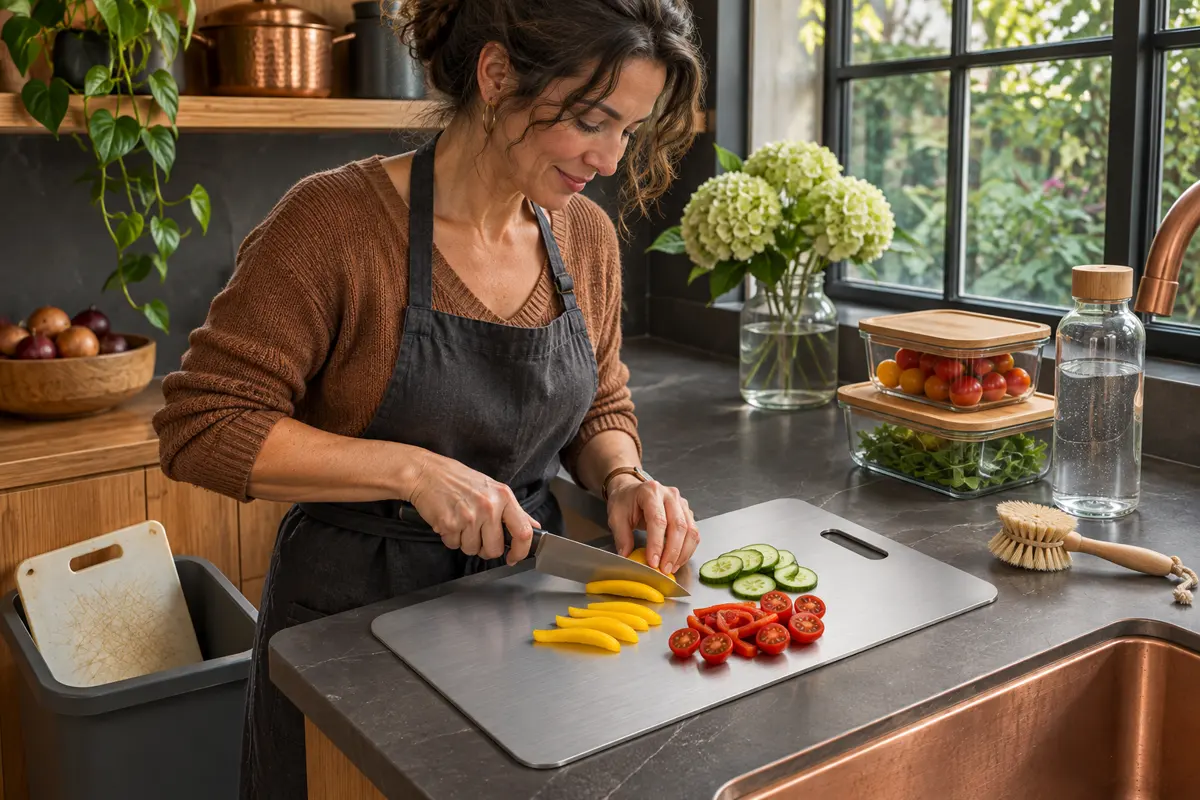
Microplastics have gone from a science-page topic to a kitchen-counter question. People see headlines, look at their stack of scratched plastic boards and takeout containers, and feel they should change everything at once. That rarely lasts. A better approach is a short, focused plan: a few swaps, in the right order, spread across a month so each one becomes a habit before the next.
First, a calm look at what we know
Microplastics are tiny plastic particles, and research has found them in many foods and drinks. According to the U.S. Food and Drug Administration, current scientific evidence does not demonstrate that the levels detected in foods pose a risk to human health, and the agency continues to monitor research as measuring methods improve. So this plan is not about fear. It is about practical choices: many people simply prefer to cut down on avoidable plastic at home, especially where it is easy, and in the kitchen it usually is.
Where do kitchen sources come from? Mostly from wear and heat: a knife cutting grooves into a plastic board, plastic scraped by metal utensils, and plastic containers used with hot or oily food. That is why the plan starts there. For the cutting board side in detail, see our guide to microplastics and cutting boards.
Your 30-day calendar at a glance
| Week | Focus | What to do |
|---|---|---|
| Week 1 (days 1–7) | The cutting board | Retire scratched plastic boards; set up a non-plastic board with a raw-meat side and a produce side |
| Week 2 (days 8–14) | Heat | Reheat and microwave in glass or ceramic; no hot food or boiling liquids poured into plastic |
| Week 3 (days 15–21) | Storage | Move leftovers, sauces and oily foods to glass jars or steel containers; let food cool before storing |
| Week 4 (days 22–30) | Small tools and habits | Swap melted or worn plastic spatulas, replace shedding sponges, rethink water bottles and the kettle |
Week 1: the cutting board
Start with the item that gets the most friction every single day. Look at your plastic boards in good light: deep knife grooves and a fuzzy surface mean material has been coming off. Those grooves also hold juices and are hard to clean, which is why food-safety guidance has long recommended replacing boards that are badly worn (we explain the signs in how often to replace a cutting board).
- Day 1: sort your boards. Keep the good ones, recycle or retire the scarred plastic ones.
- Day 2–3: choose a non-plastic main board. Wood, bamboo and metal are the usual options; see the best cutting board material for the trade-offs.
- Day 4–7: set up two zones: one board or side for raw meat and fish, one for produce and bread. Wash right after raw meat.
This is where the Katori titanium board makes life easy: it is non-porous, double-sided (one face for raw, one for produce) and goes straight in the dishwasher, so the new habit costs no extra effort.
Week 2: stop mixing plastic and heat
Heat is the second big lever. The FDA advises using only containers labeled microwave-safe; many households go one step further and simply heat everything in glass or ceramic, which removes the question altogether.
- Transfer leftovers to a plate or glass dish before microwaving.
- Cover with a plate or a microwave-safe glass lid instead of plastic wrap touching the food.
- Do not pour boiling liquids or hot soup into plastic containers or bags.
- Hand-wash plastic items you keep, or put them on the top rack away from the heating element.
Week 3: storage and leftovers
Now tackle the fridge and the pantry. You do not need to replace every container on day 15. Start with the ones used for warm, oily or acidic food, which are the toughest on plastic.
- Let food cool firstCool leftovers briefly (and refrigerate within two hours, as USDA food-safety guidance recommends) before closing the lid.
- Glass for leftoversGlass containers with lids go from fridge to microwave to table.
- Jars for sauces and oilsReuse glass jars for dressings, broths and pantry staples.
- Steel for lunchesA stainless steel box is light and does not stain from tomato sauce.
- Retire the worst plasticCloudy, cracked, warped or scratched containers go first.

Week 4: small tools, sponges and water
The last week covers the little things that wear out quietly.
- Spatulas and spoons: replace melted or frayed plastic ones with wood, stainless steel or silicone.
- Sponges: synthetic sponges shed as they wear; replace them more often or try a wooden brush or cellulose cloth for everyday dishes.
- Water: keep a glass or steel bottle filled from the tap in the fridge instead of buying single-use bottles.
- Kettle and coffee: if you are replacing a kettle anyway, glass or stainless steel models are easy to find.
- Day 30 check: walk through the kitchen and write a short list of what is left to swap later, when things wear out naturally.
What not to do
Do not panic-buy a new kitchen. Replacing perfectly good items all at once creates waste and costs money. The plan works because it targets the highest-wear items first and lets the rest be replaced over time. And do not trade one problem for another: a cutting board you dislike using is a board you will not use, so pick one that fits how you cook. If you are cooking for the holidays, our Thanksgiving cutting board rules fit right into week 1.
Our recommendation: the Katori titanium cutting board
The cutting board is the first and most important swap in this plan, and the Katori 100% titanium cutting board is the board we recommend for it. It is the most practical way to take plastic out of your daily prep: non-porous, plastic-free, light enough to grab with one hand and dishwasher-proof, so the new habit is easier than the old one.
- 100% titanium, zero microplastics: nothing shed into your food, however much you chop.
- Non-porous surface: juices, smells and stains stay on top and wash away.
- Double-sided: one face for raw meat and fish, the other for produce and bread.
- Laser-cut surface: designed by the maker to help knives keep their edge.
- Dishwasher-proof: no warping, cracking or oiling.
- Handy size: 11.4" x 7.9".
On the official store a single board is currently $59.00 (50% off), the best-selling 2-board set is $99.98 ($49.99 each), the 3-board set is $137.85 ($45.95 each) and the 4-board set is $143.60 ($35.90 each). Shipping is calculated at checkout. Every order is backed by a 30-day money-back guarantee, and the board is rated 4.7/5 by more than 1,894 reviewers.
Reducing microplastics in the kitchen: FAQ
How can I reduce microplastics in my kitchen?
Focus on the places where plastic meets heat, friction and wear: replace scratched plastic cutting boards, heat food in glass or ceramic instead of plastic, store hot and oily leftovers in glass or stainless steel, swap worn plastic utensils, and replace shedding sponges more often. One change per week is easier to keep than a whole-kitchen overhaul.
Do plastic cutting boards release microplastics?
Plastic boards wear down under the knife, and the grooves you see are material that has come off the surface. Researchers have measured plastic particles released from polyethylene and polypropylene boards during chopping. A non-plastic board such as wood, bamboo, glass or metal avoids that source.
Is it safe to microwave food in plastic containers?
Only use containers labeled microwave-safe, as the FDA advises. If you prefer to avoid plastic and heat together altogether, transfer food to a glass or ceramic dish before heating; it is a simple habit that removes the question.
Are microplastics in food harmful?
The science is still developing. The FDA says current evidence does not demonstrate that the levels of micro- and nanoplastics detected in foods pose a risk to human health, and it continues to monitor research. Many people still choose to reduce avoidable sources at home because the swaps are simple and practical.
What is the best plastic-free cutting board?
It depends on your priorities. Wood is gentle on knives but needs oiling and hand washing; glass is non-porous but very hard on knives; metal boards are non-porous and dishwasher-safe. A titanium board such as Katori is light, non-porous, double-sided and dishwasher-proof, which makes it an easy everyday swap.
Want to keep learning? Read are titanium cutting boards safe?, compare stainless steel cutting board pros and cons, head back to the Katori overview or read our hands-on Katori review.